TEMPORARY CITY
This body of work was made during a month-long stay at the Maha Kumbh Mela in Uttar Pradesh. A Hindu gathering that takes place every twelve years and draws millions of people from across India and beyond. Pilgrims travel to bathe at the sacred confluence of the Ganges, Yamuna, and the mythical Saraswati rivers, an act of purification believed to release past karma and renew the spirit.
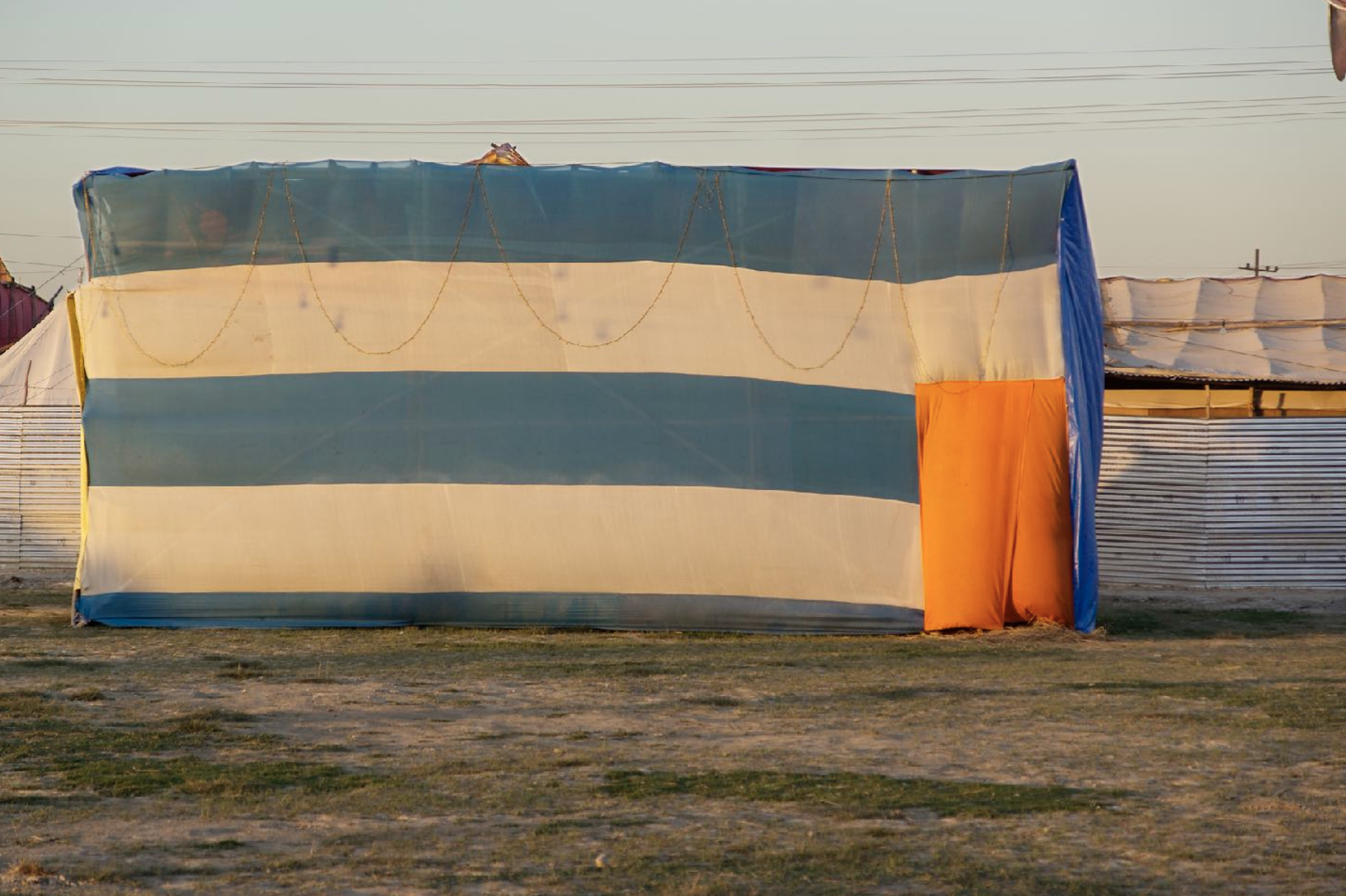
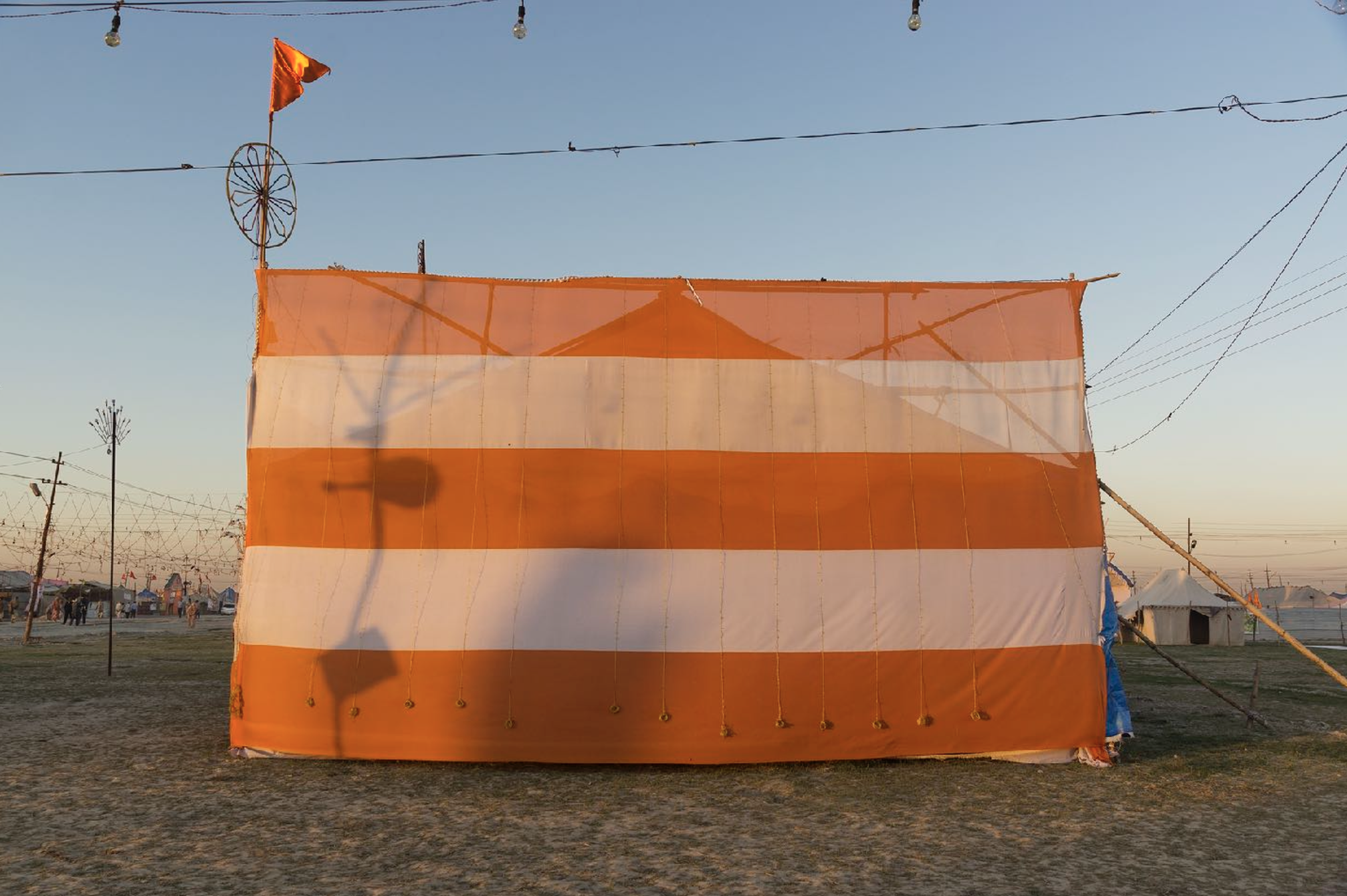
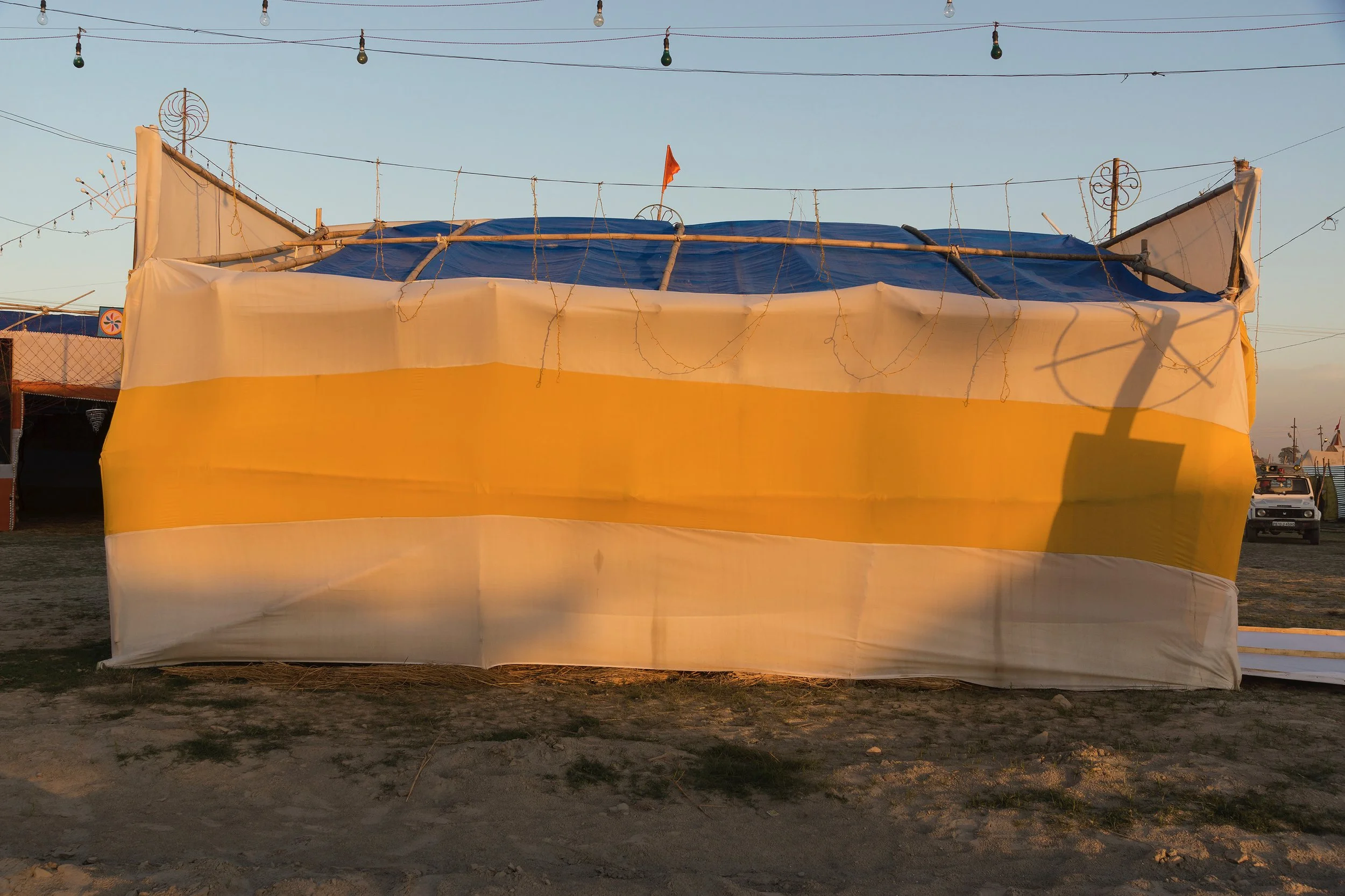
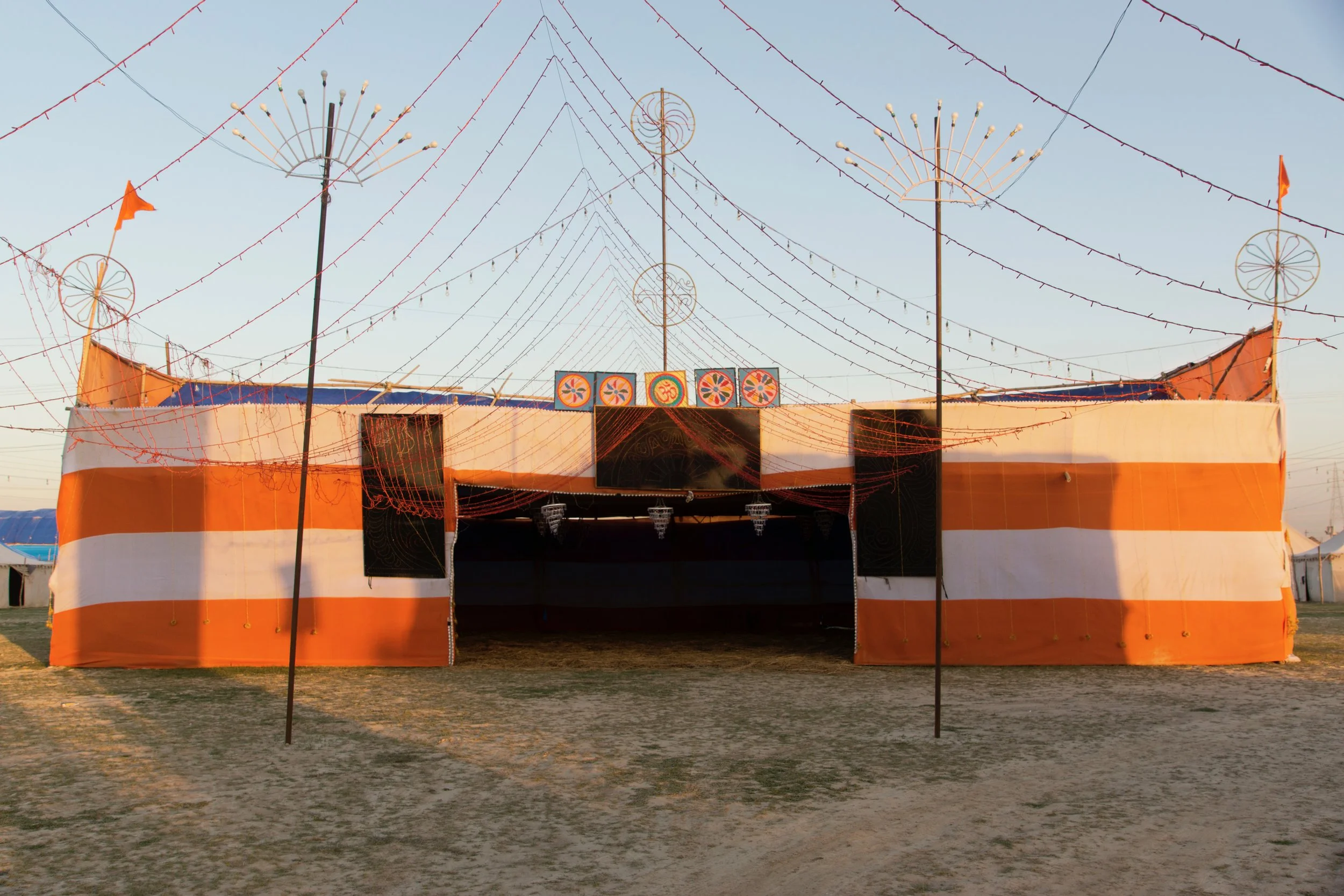
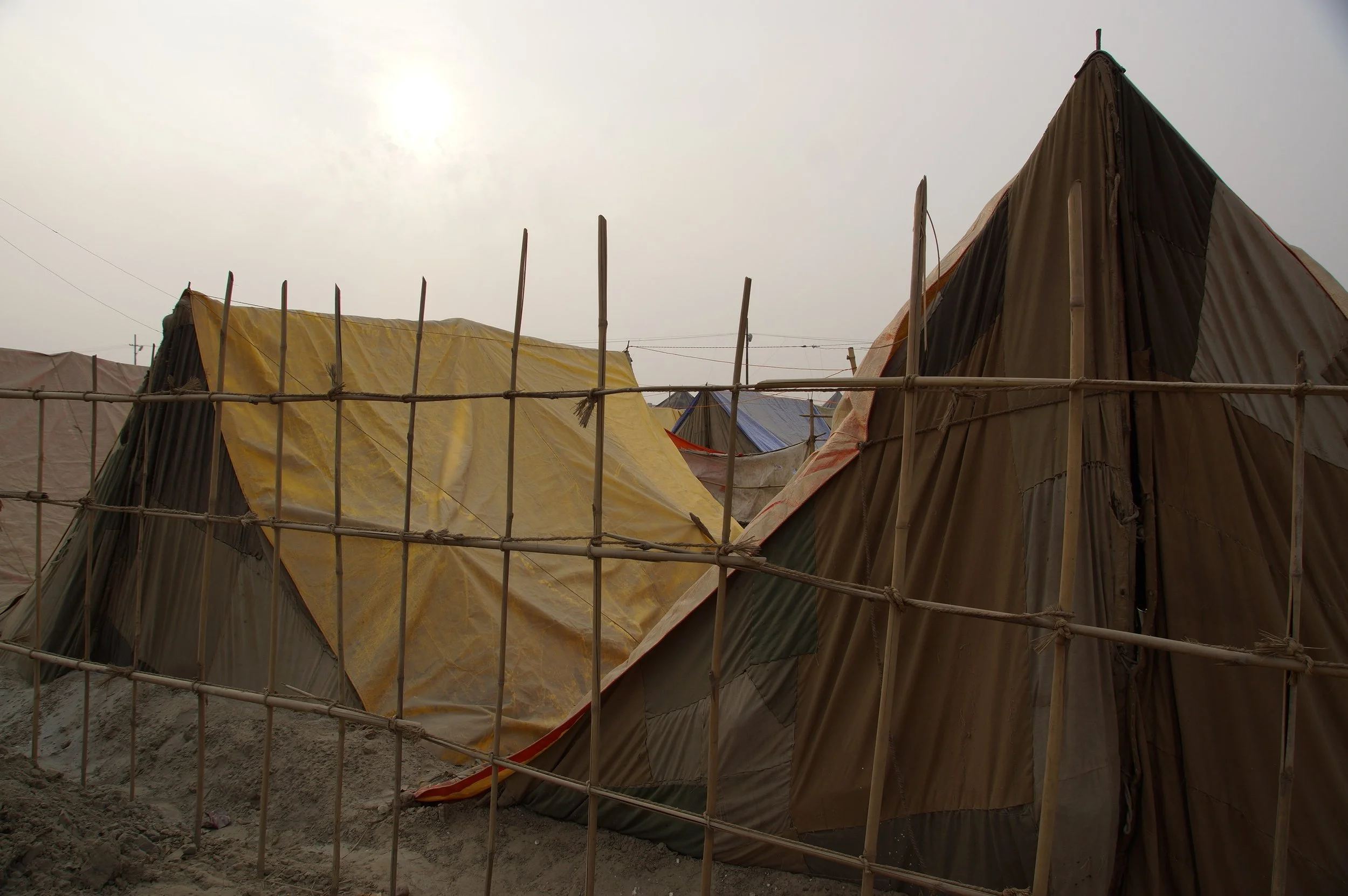
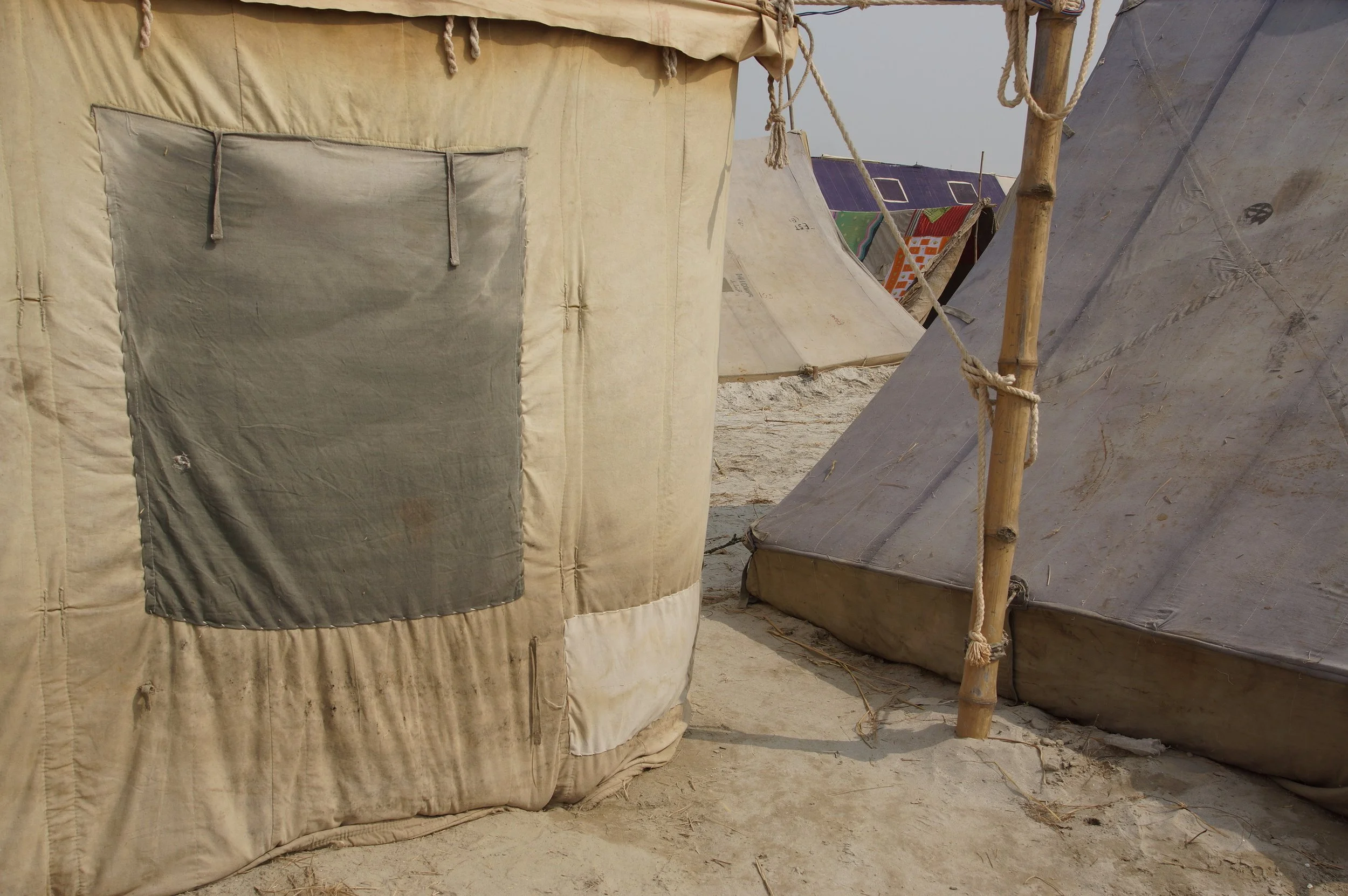
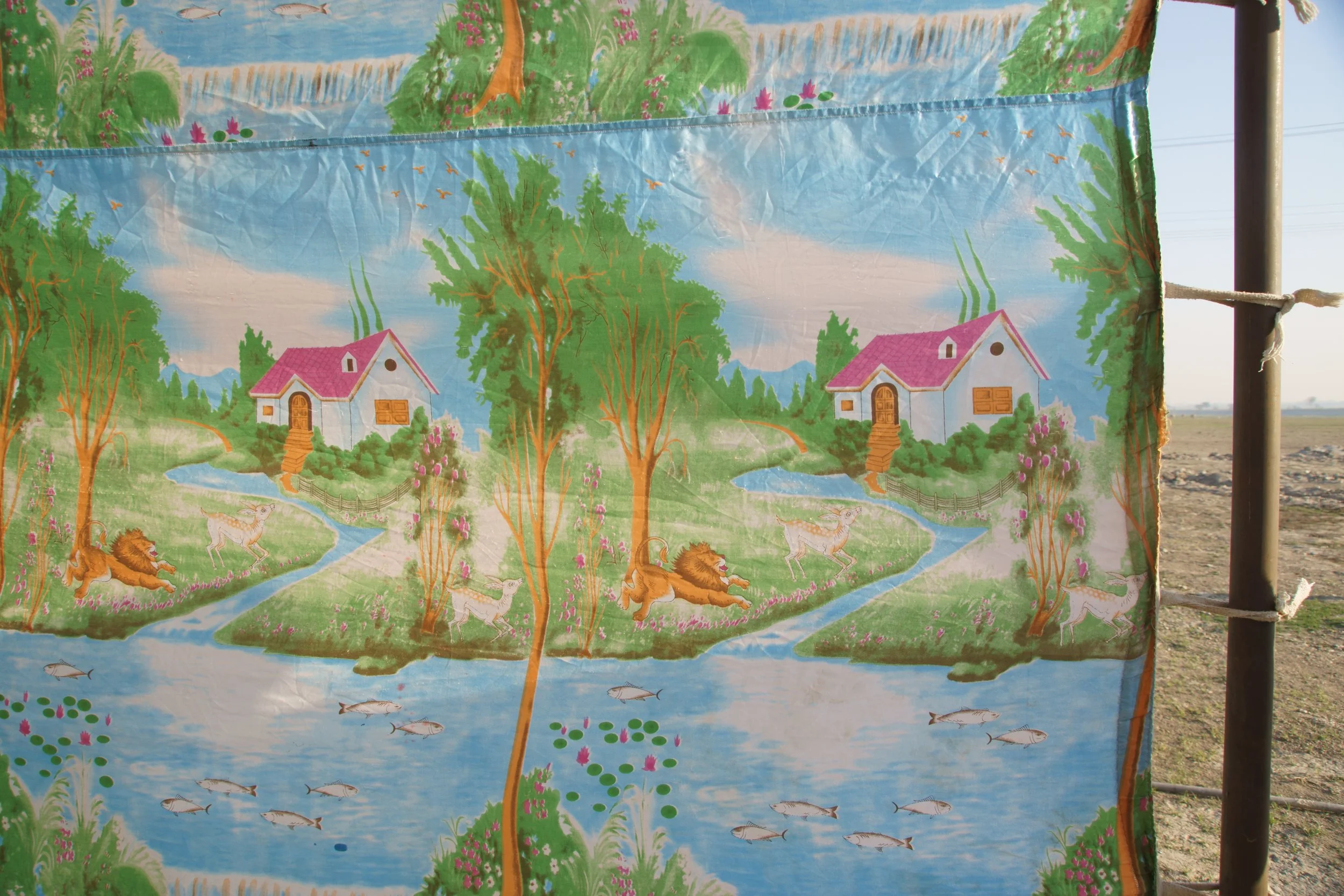
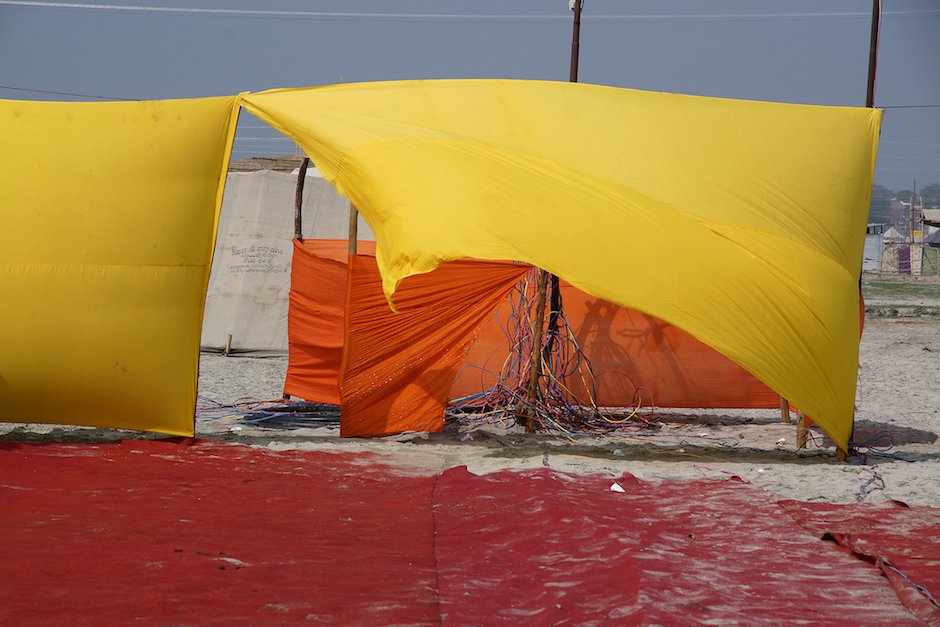
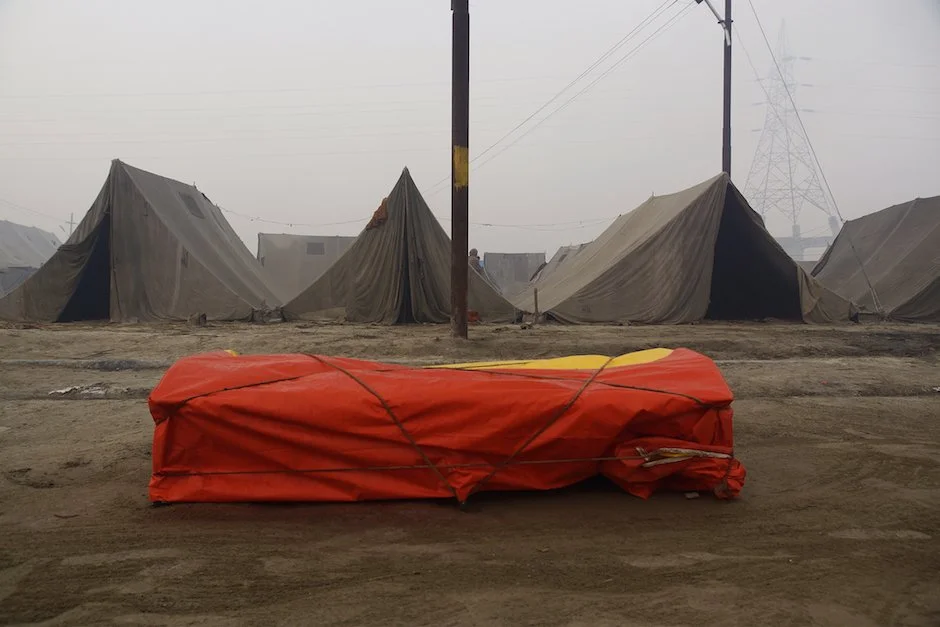
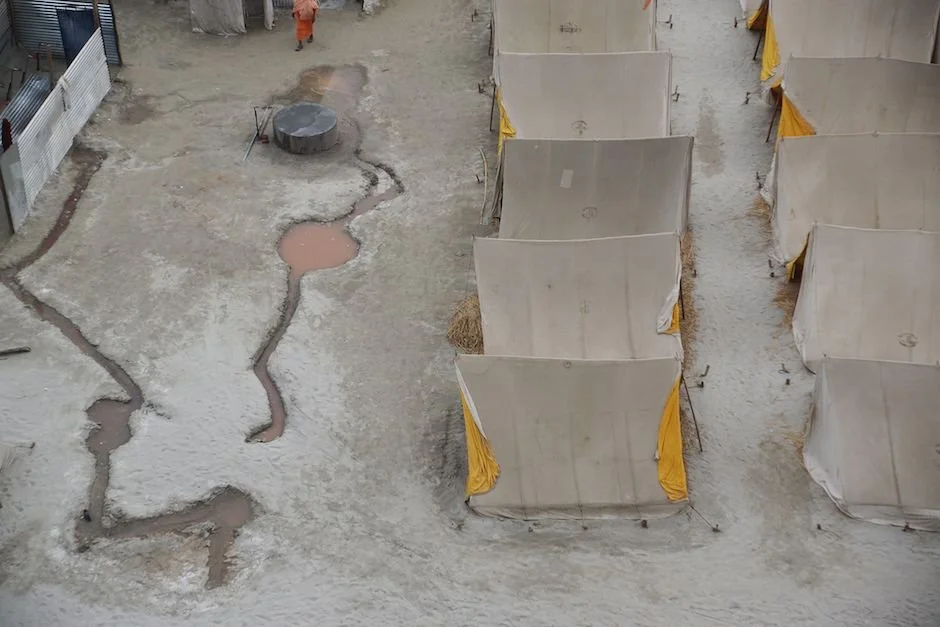
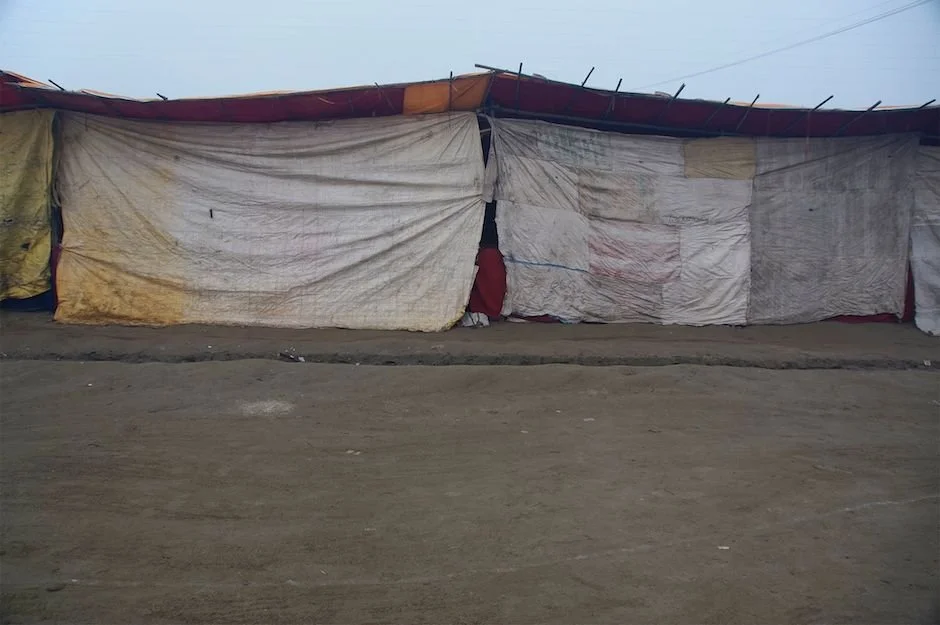
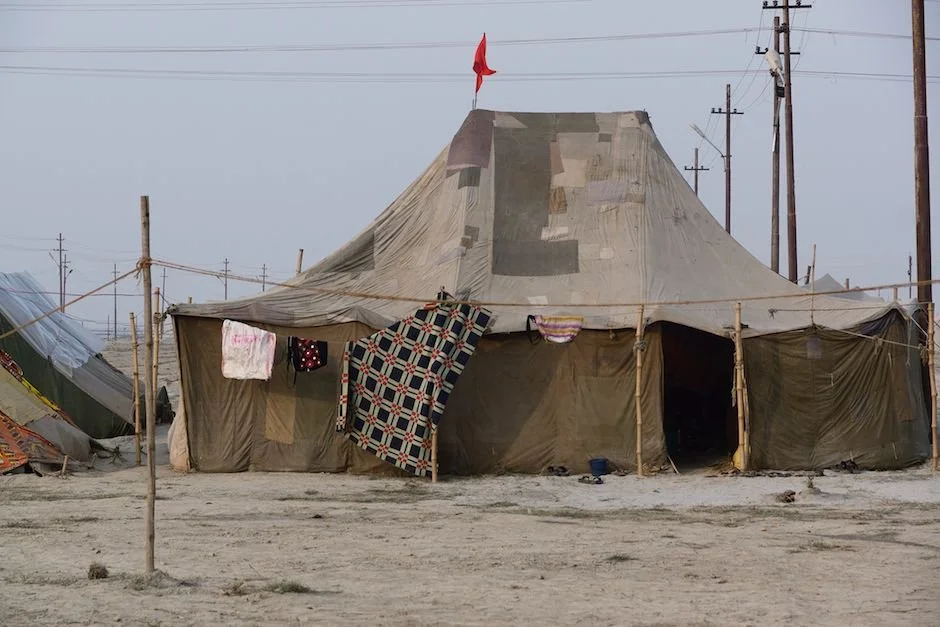
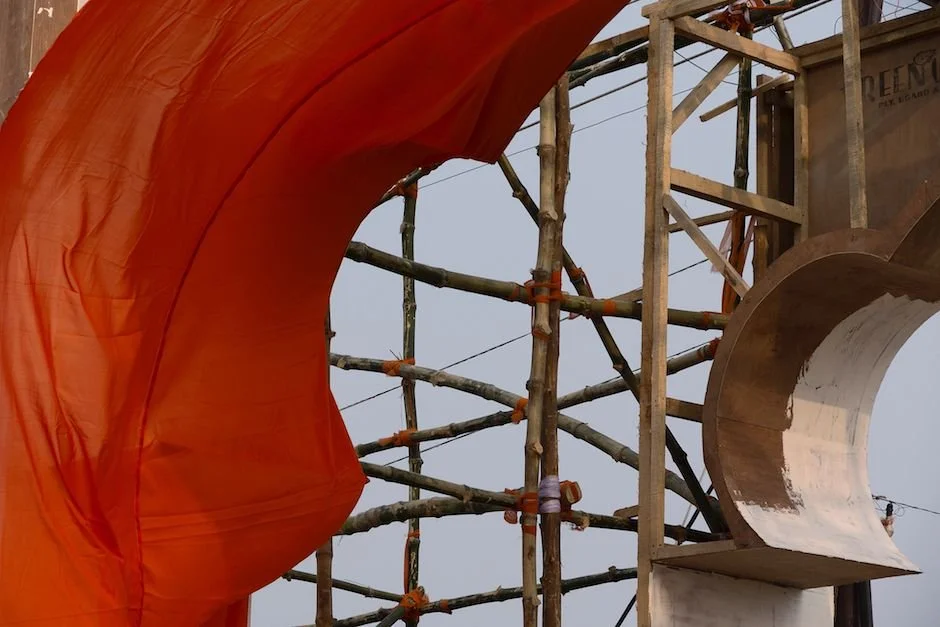
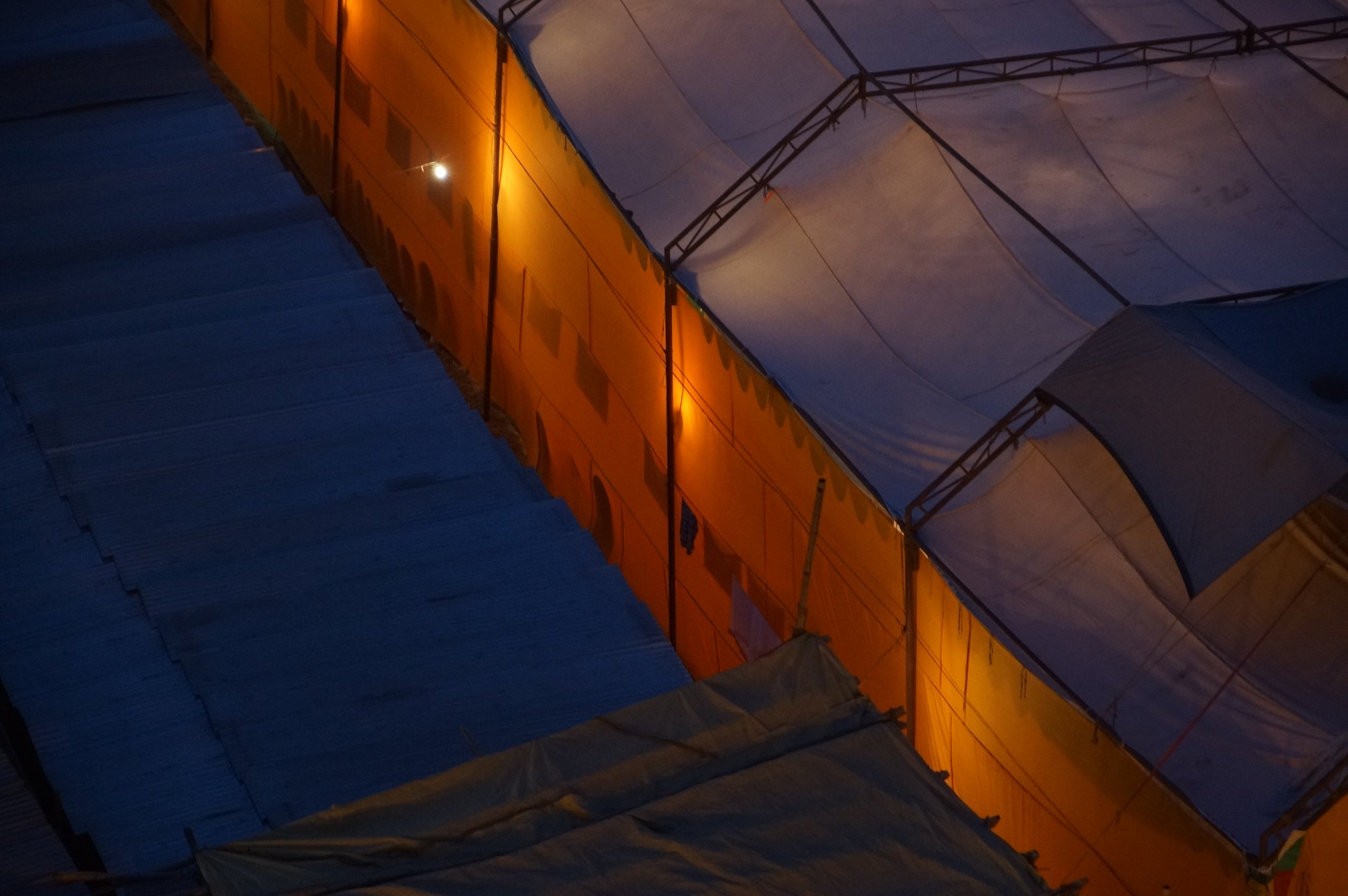
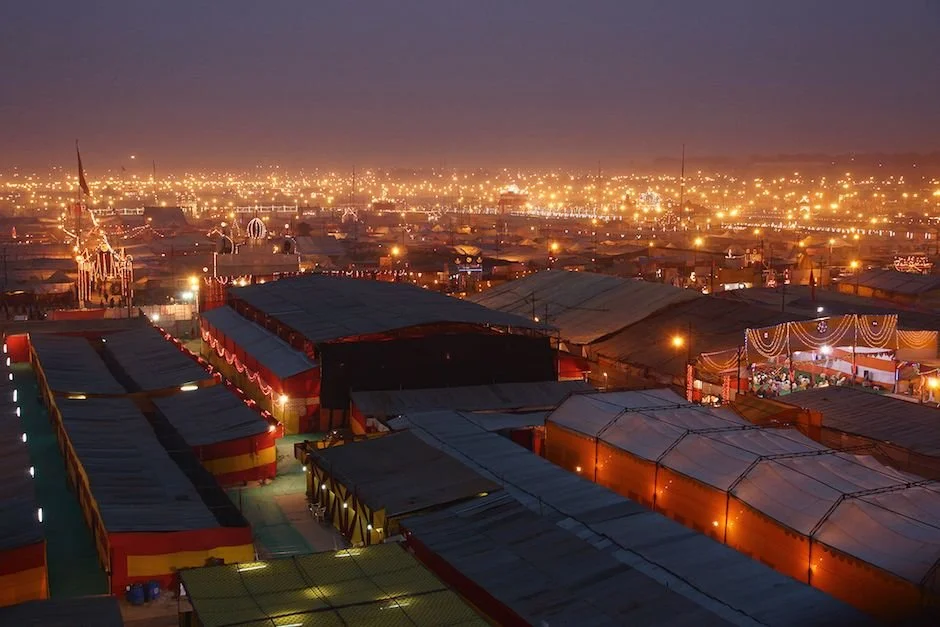
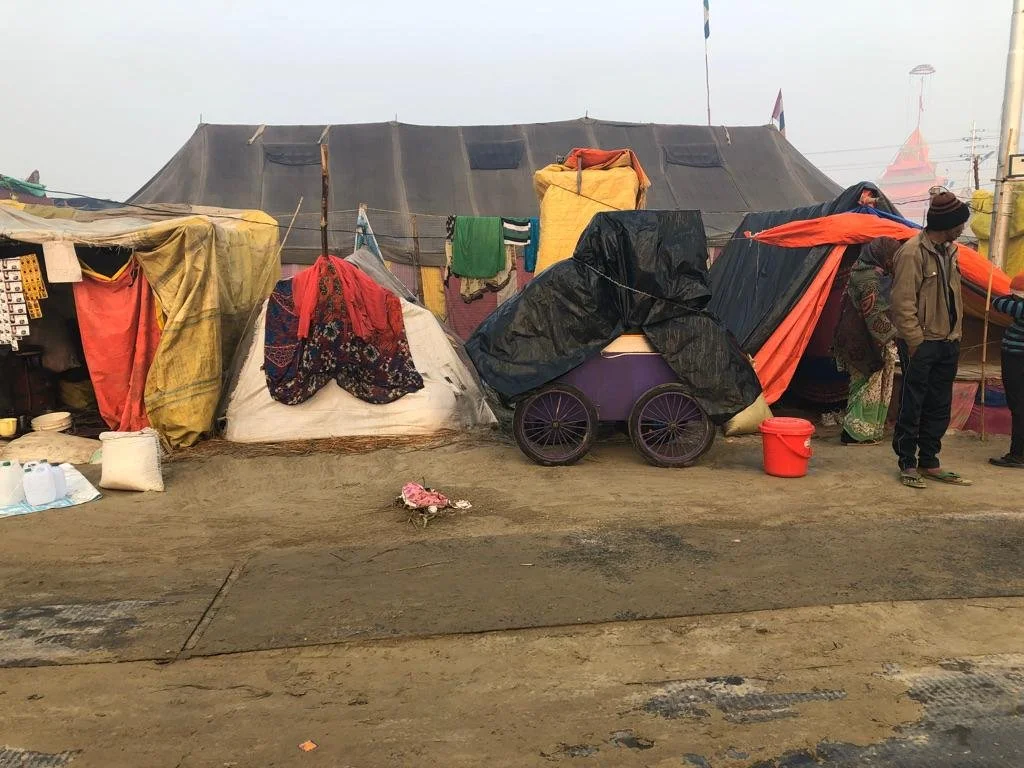
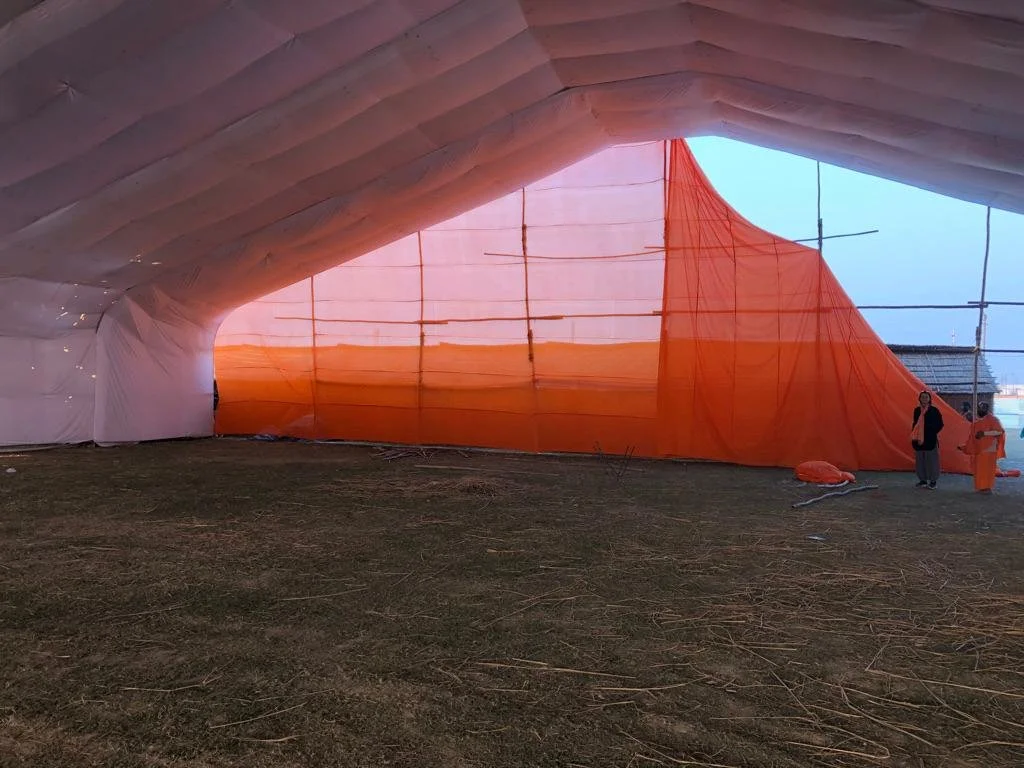
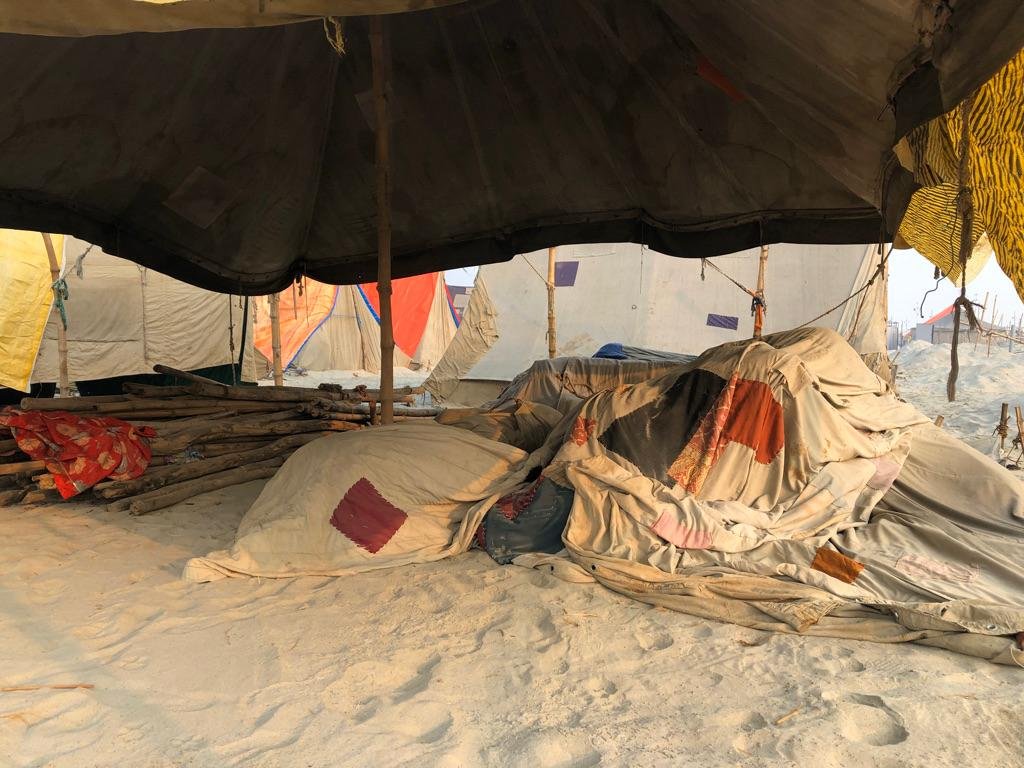
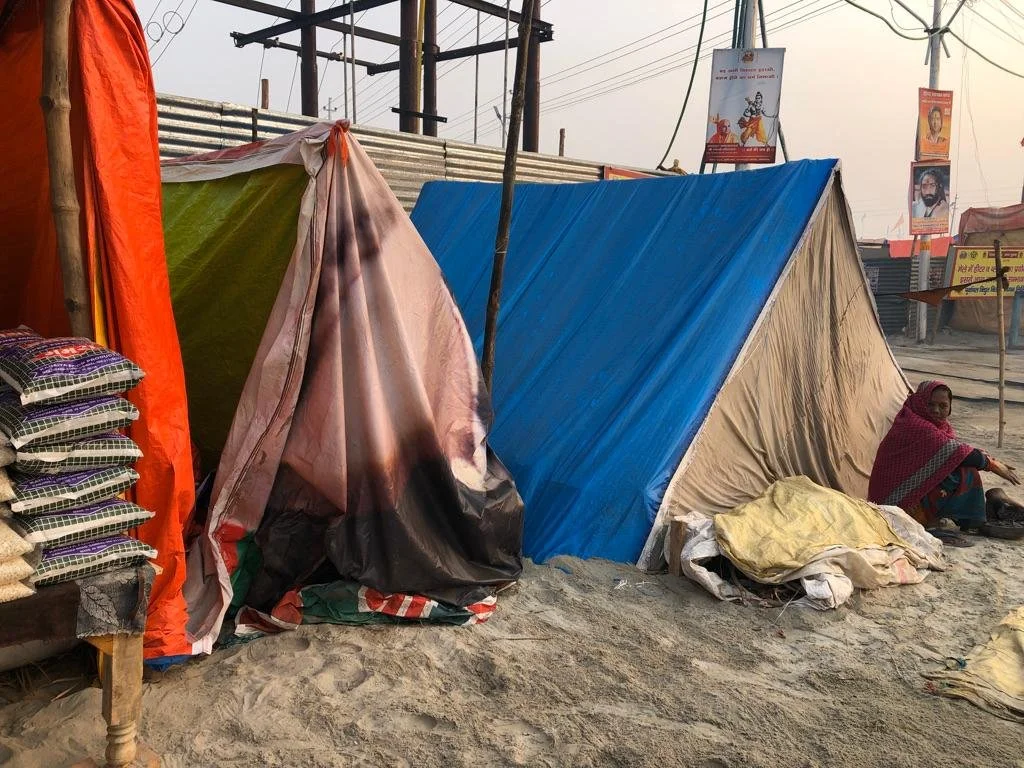
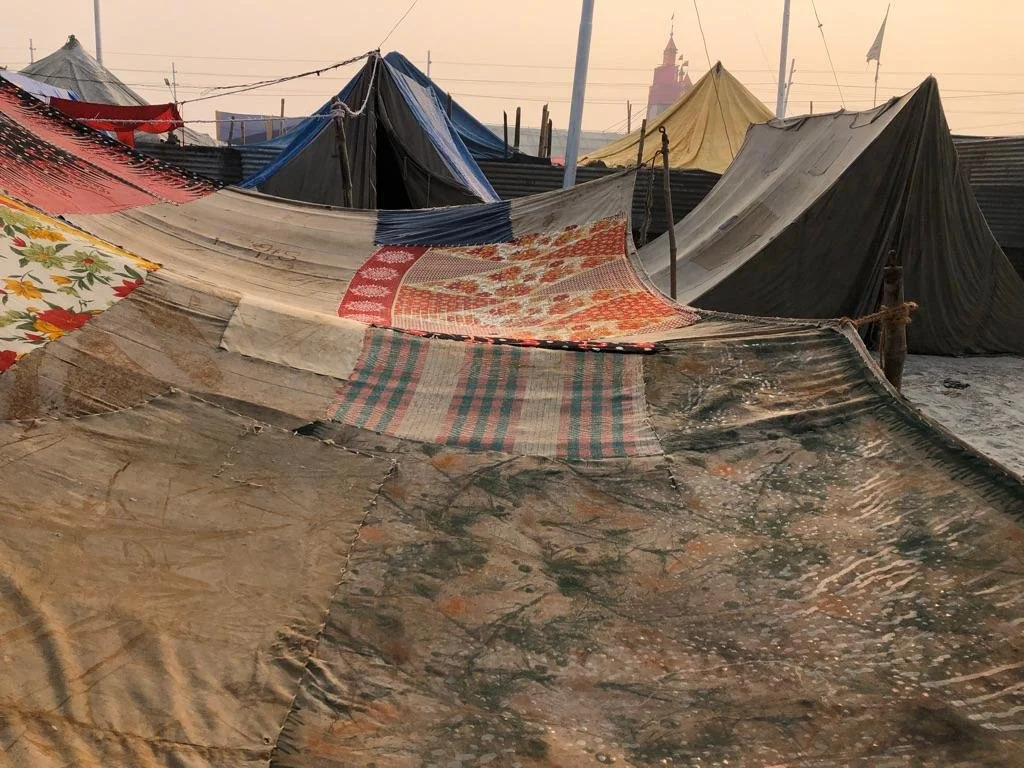
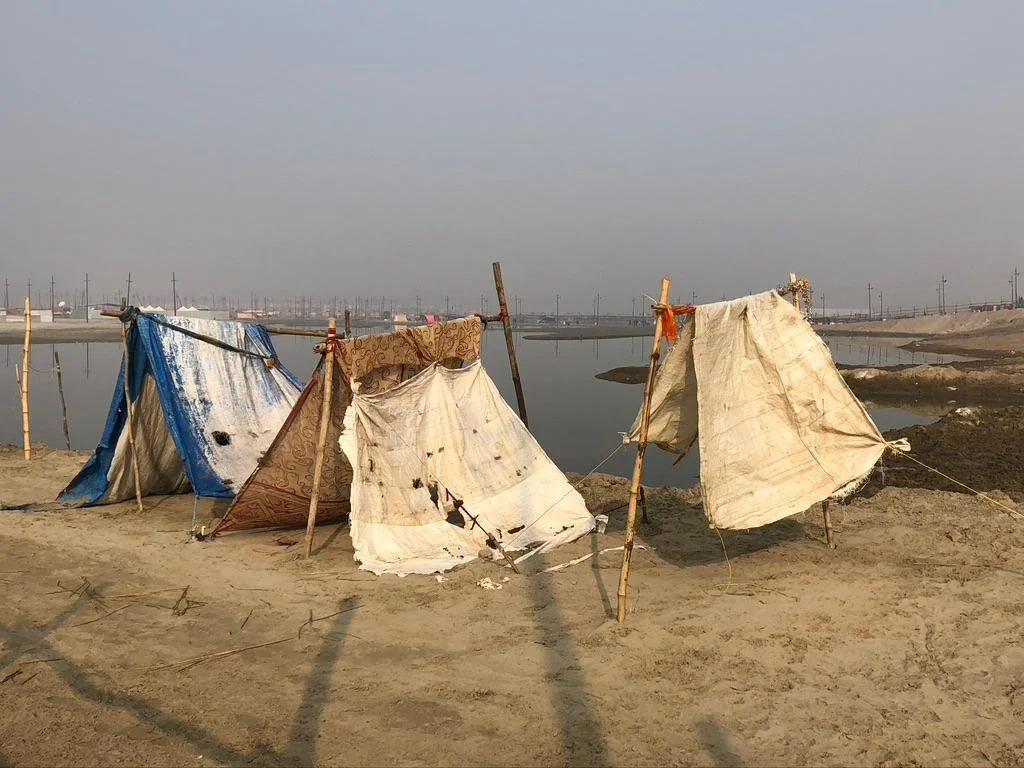
To accommodate this vast movement of bodies, a temporary city rises along the riverbanks—constructed from fabric, bamboo, rope, and tarpaulin. These transitory shelters house pilgrims for days or weeks before being dismantled, leaving little trace behind.
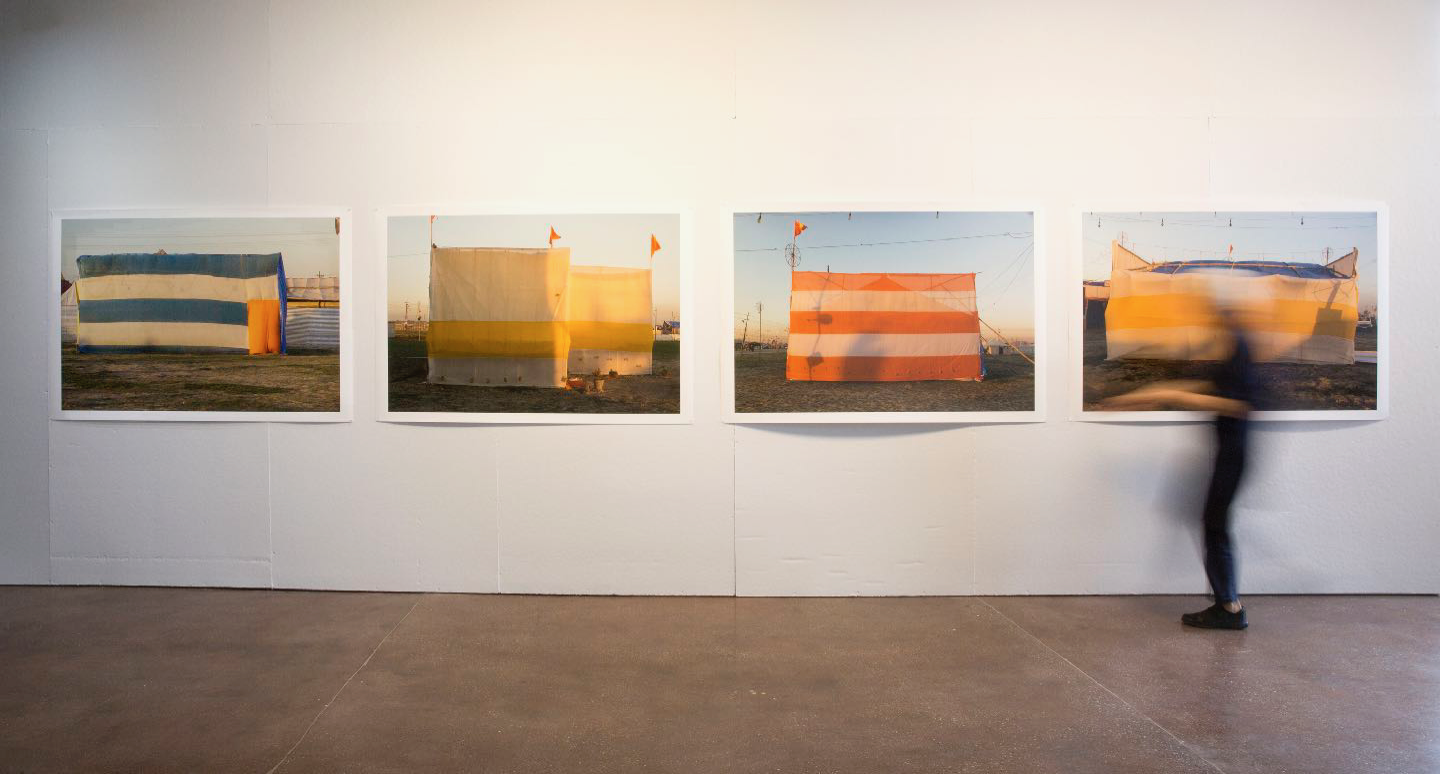
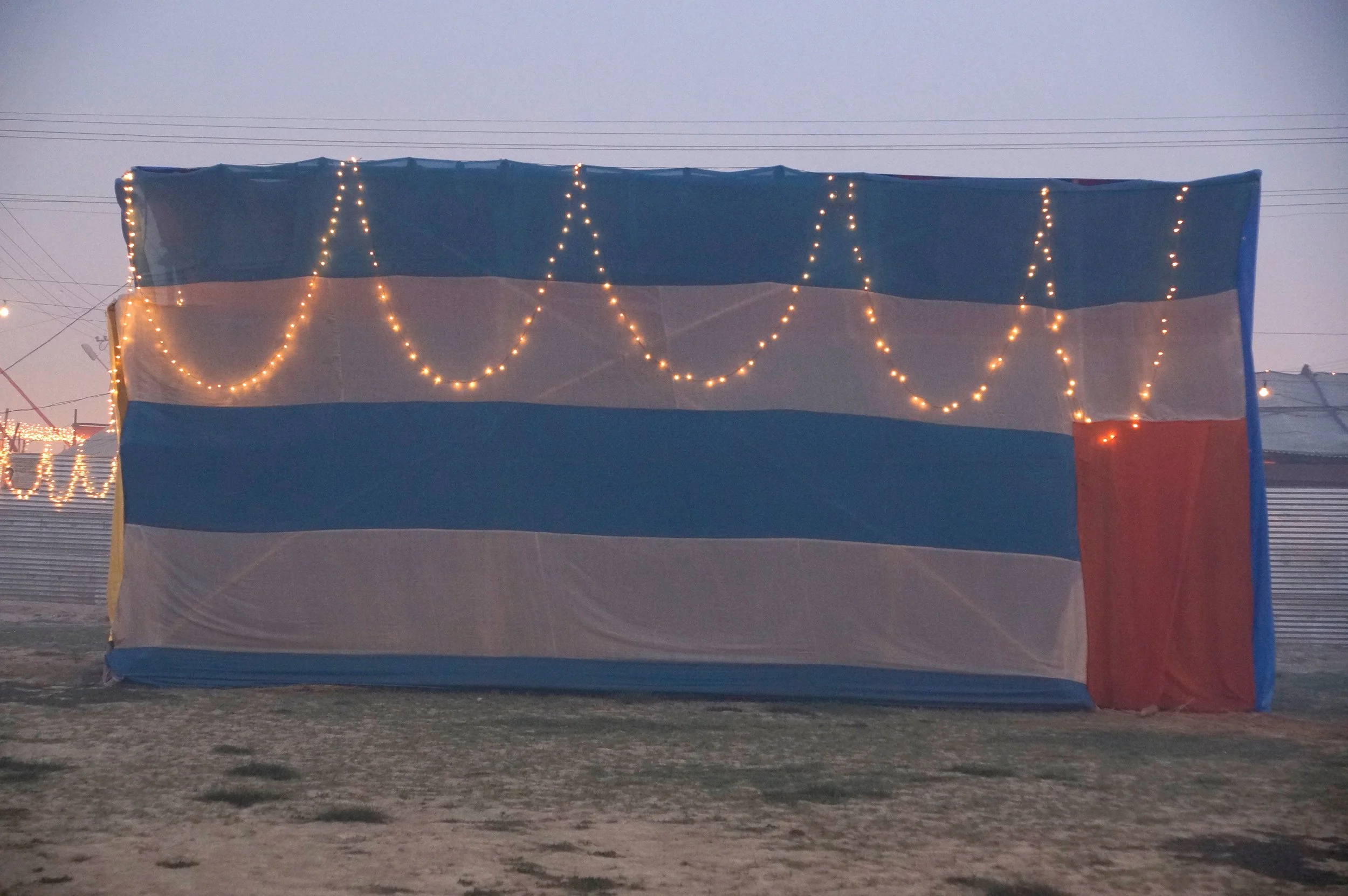
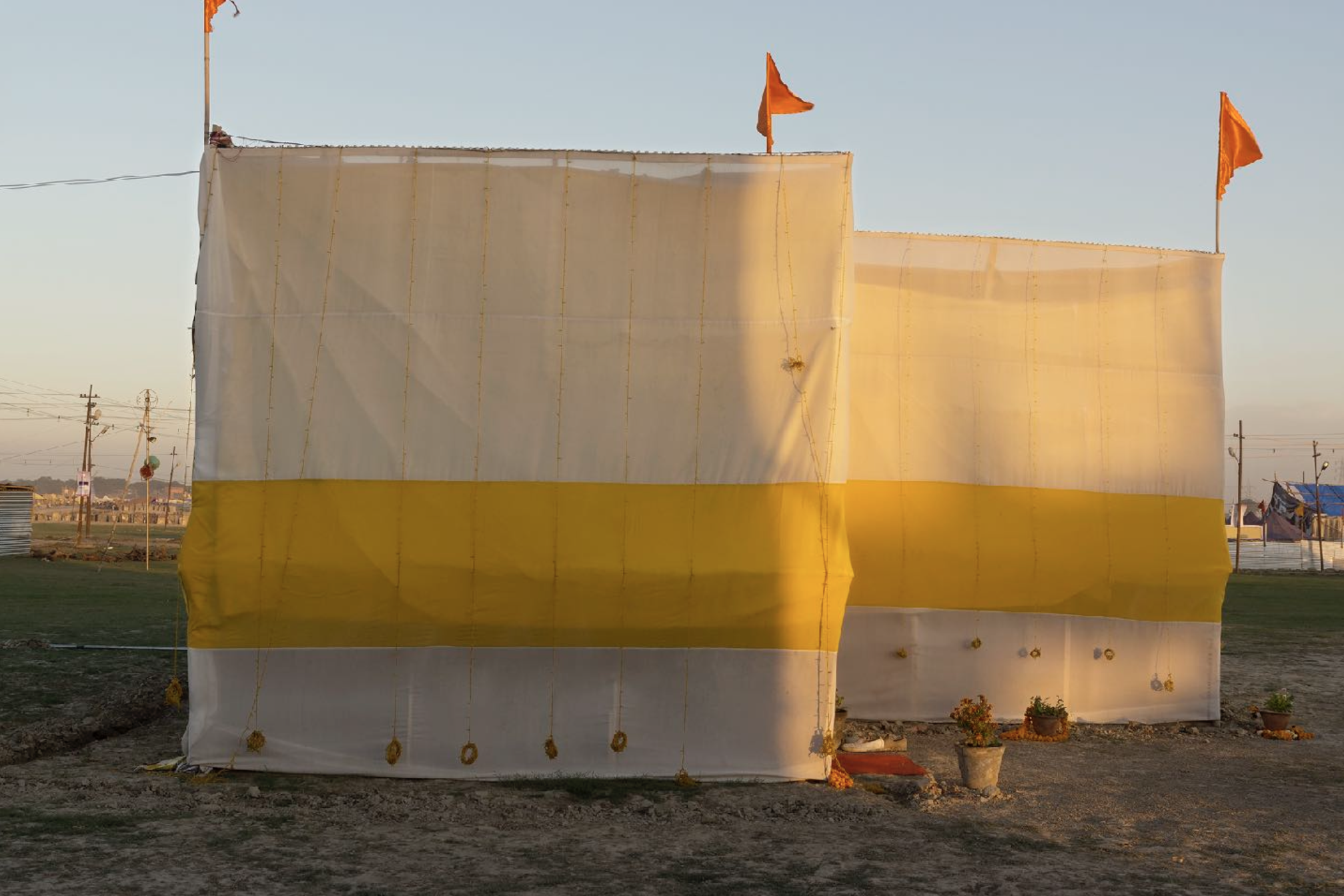
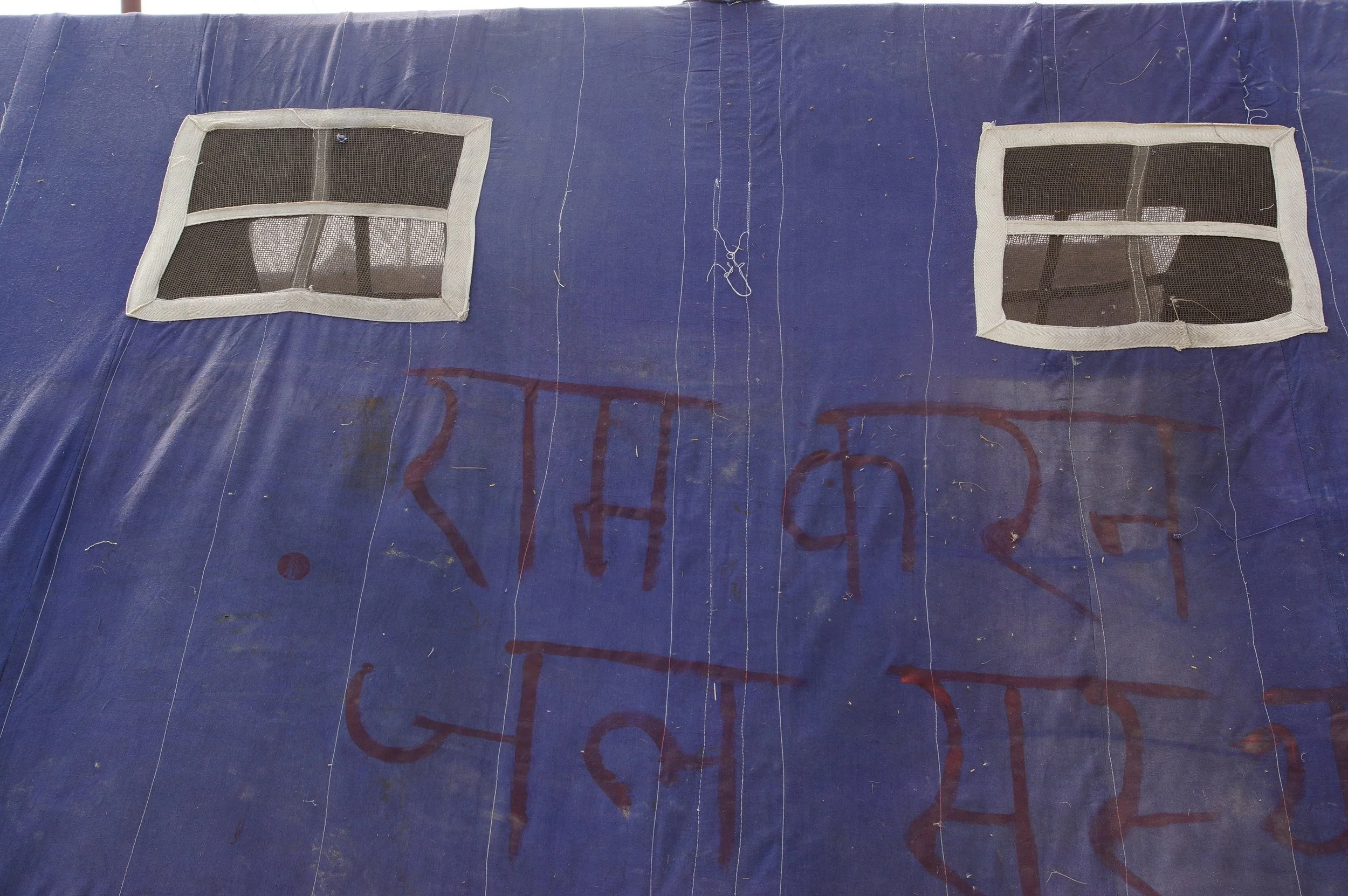
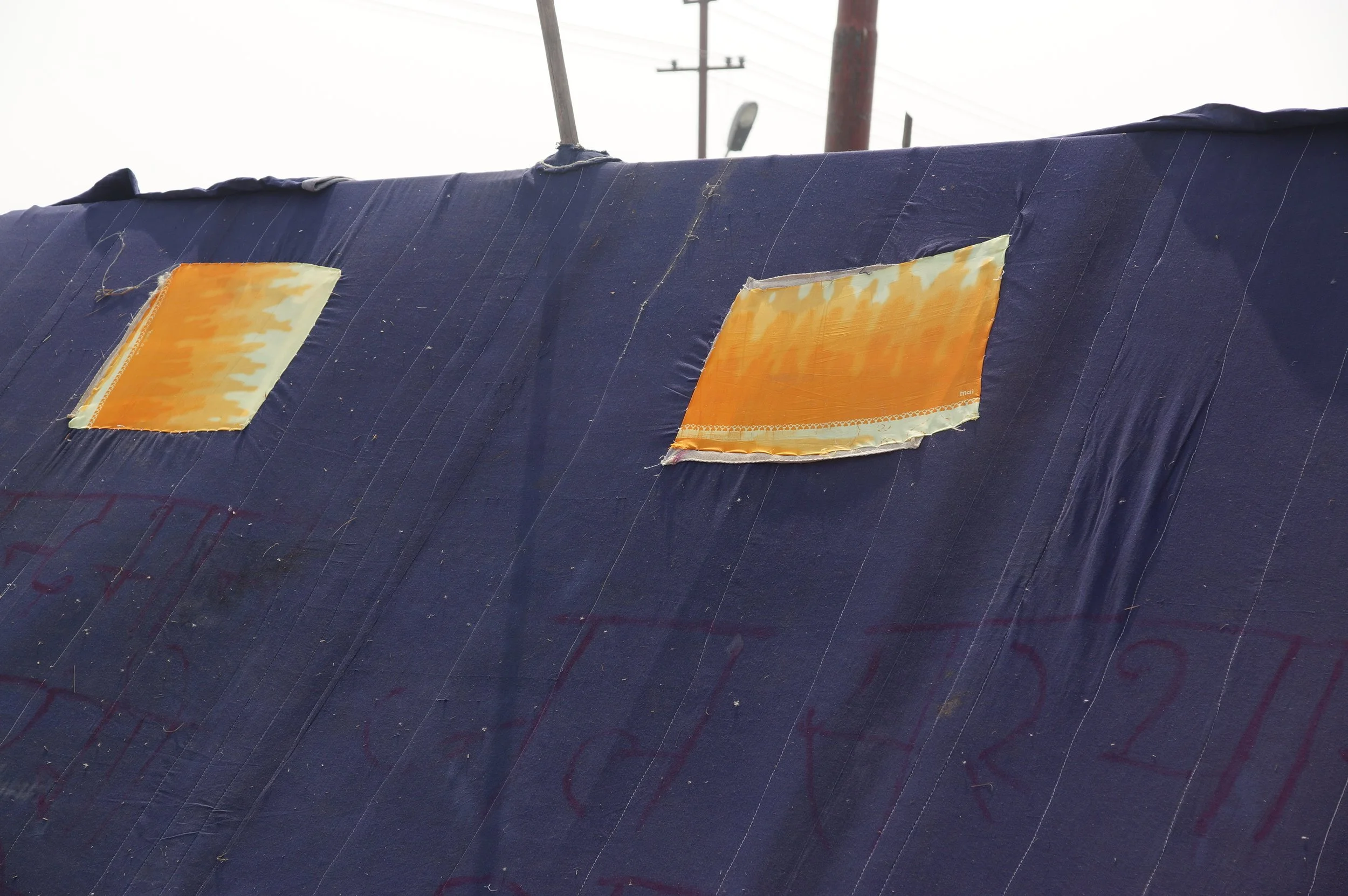
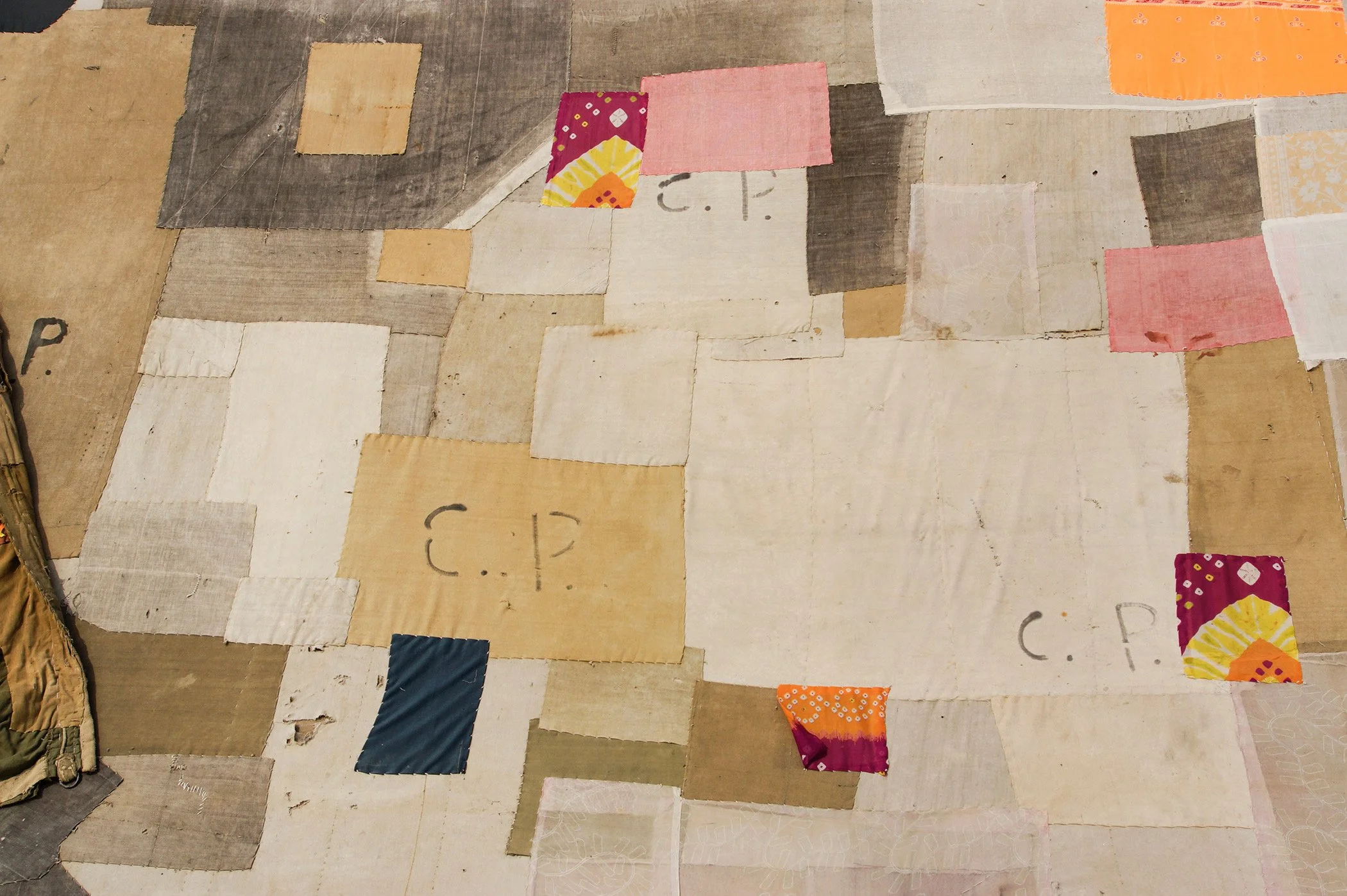
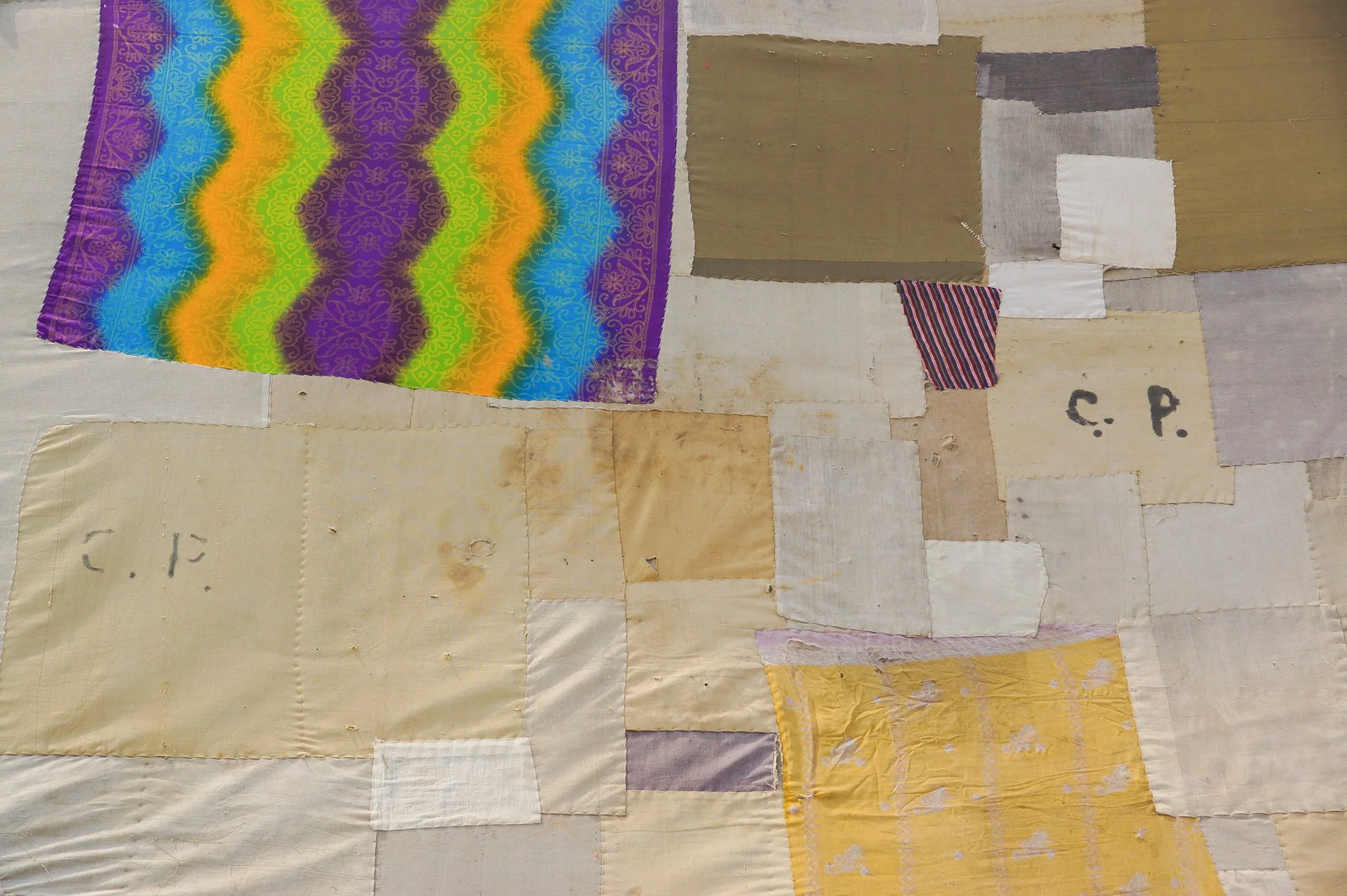
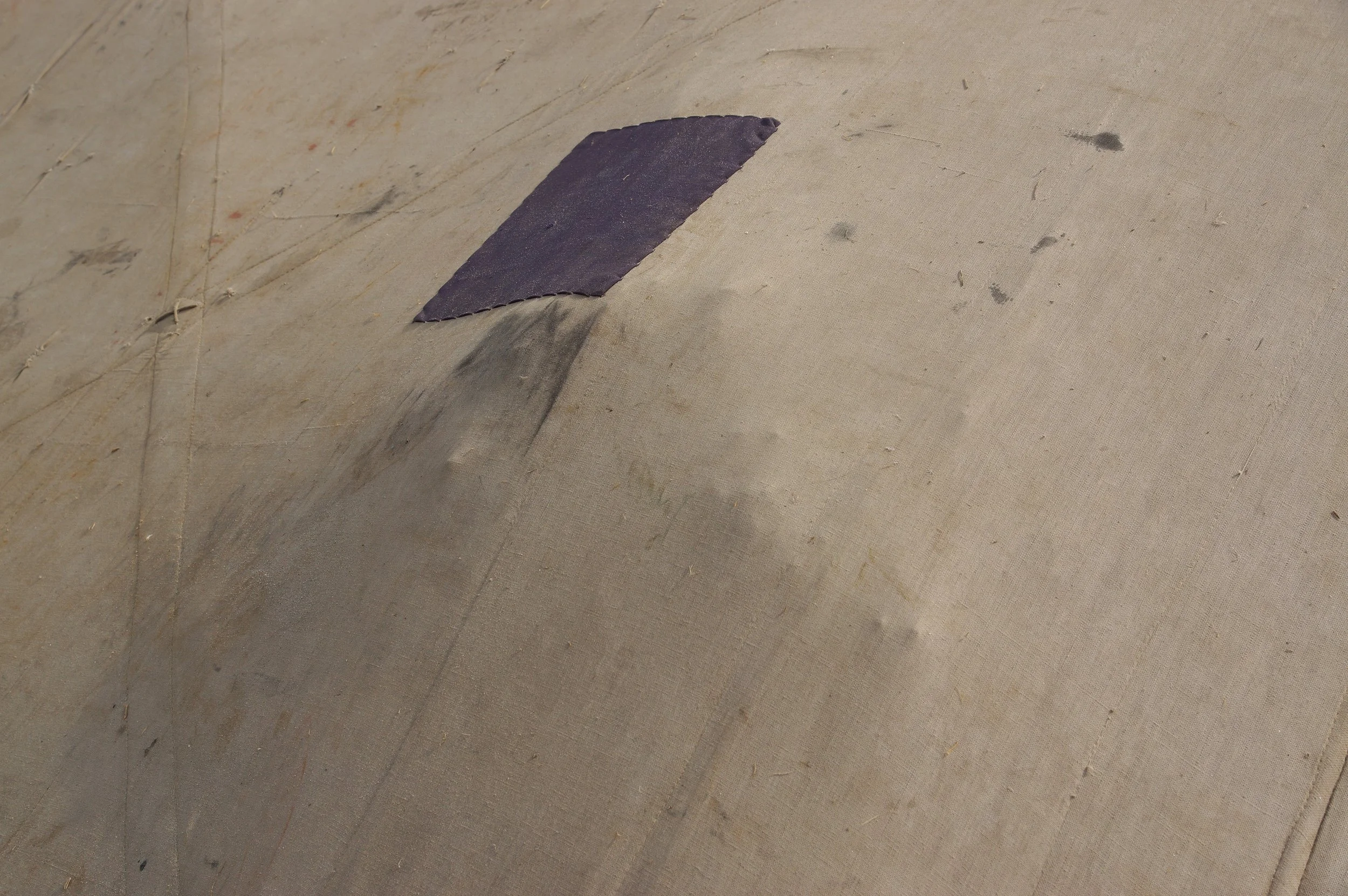
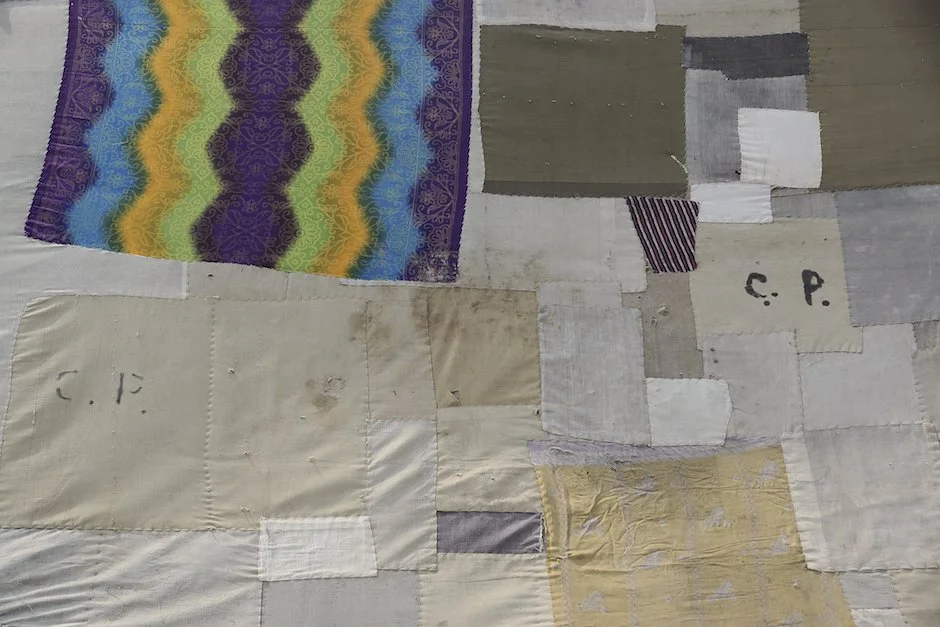
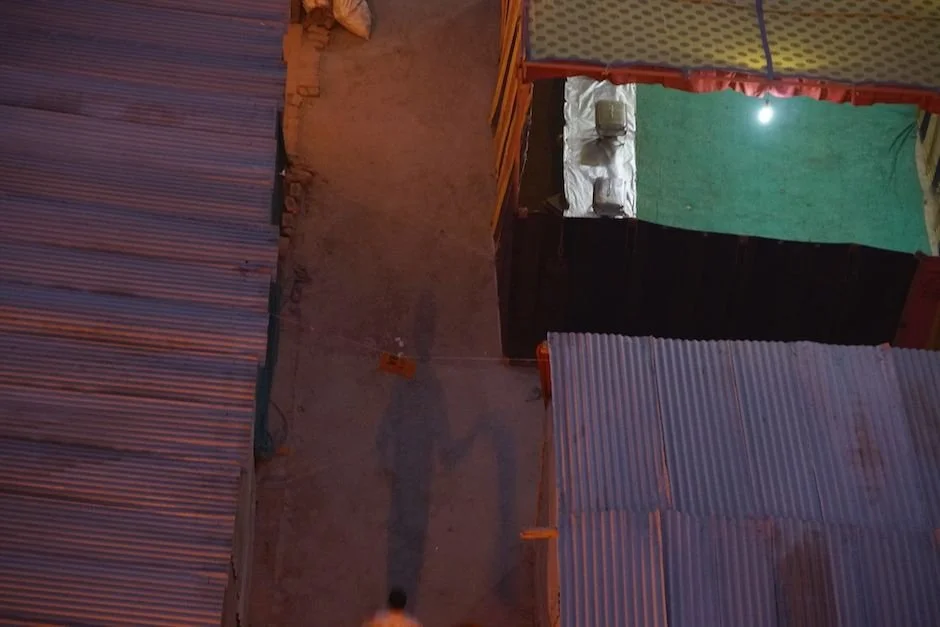
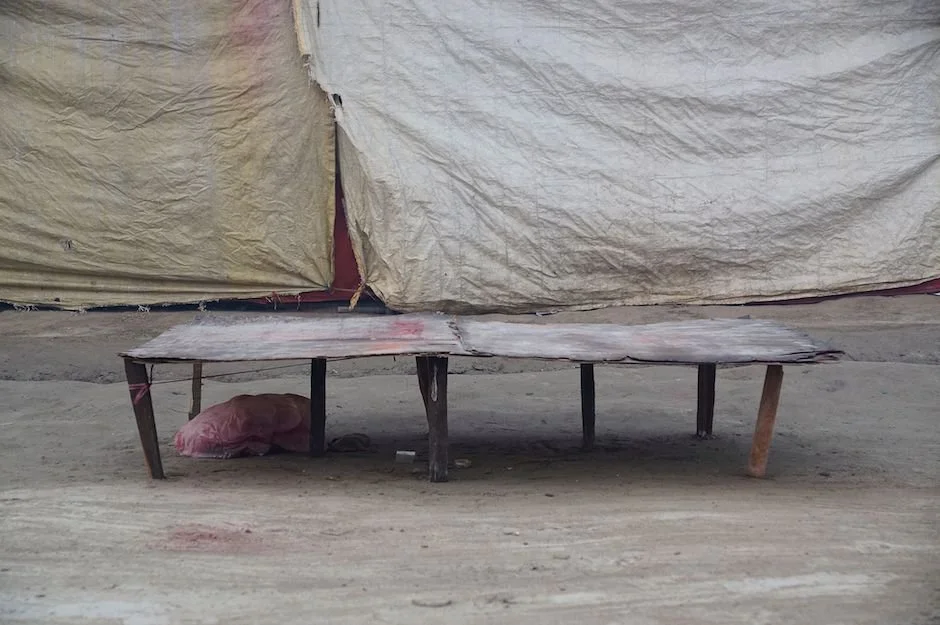
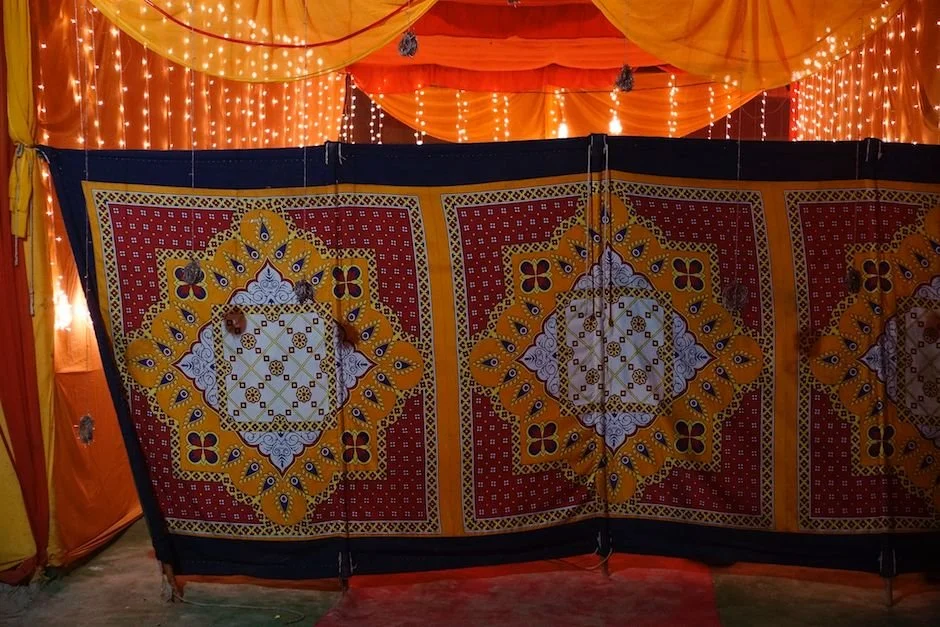
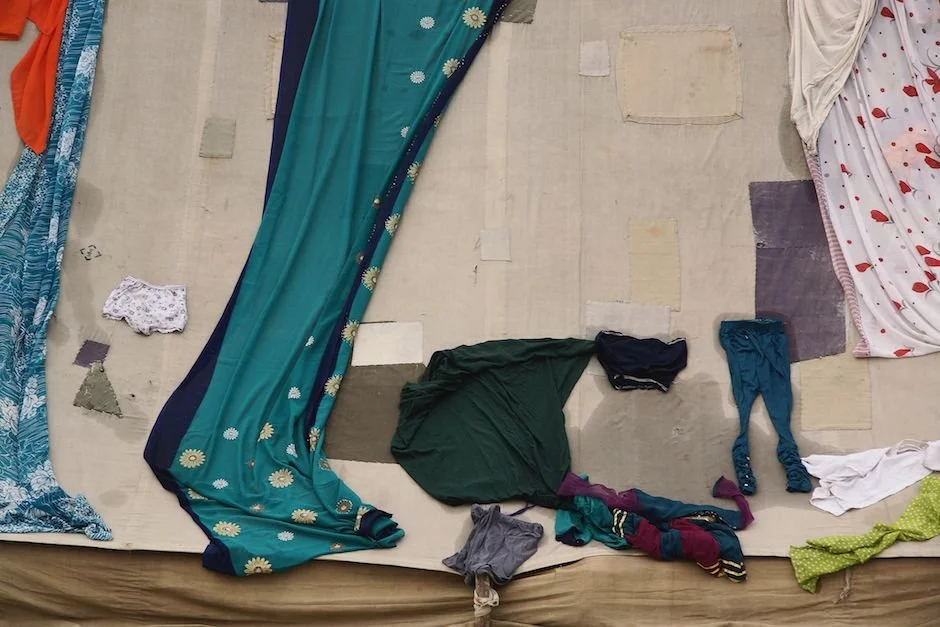
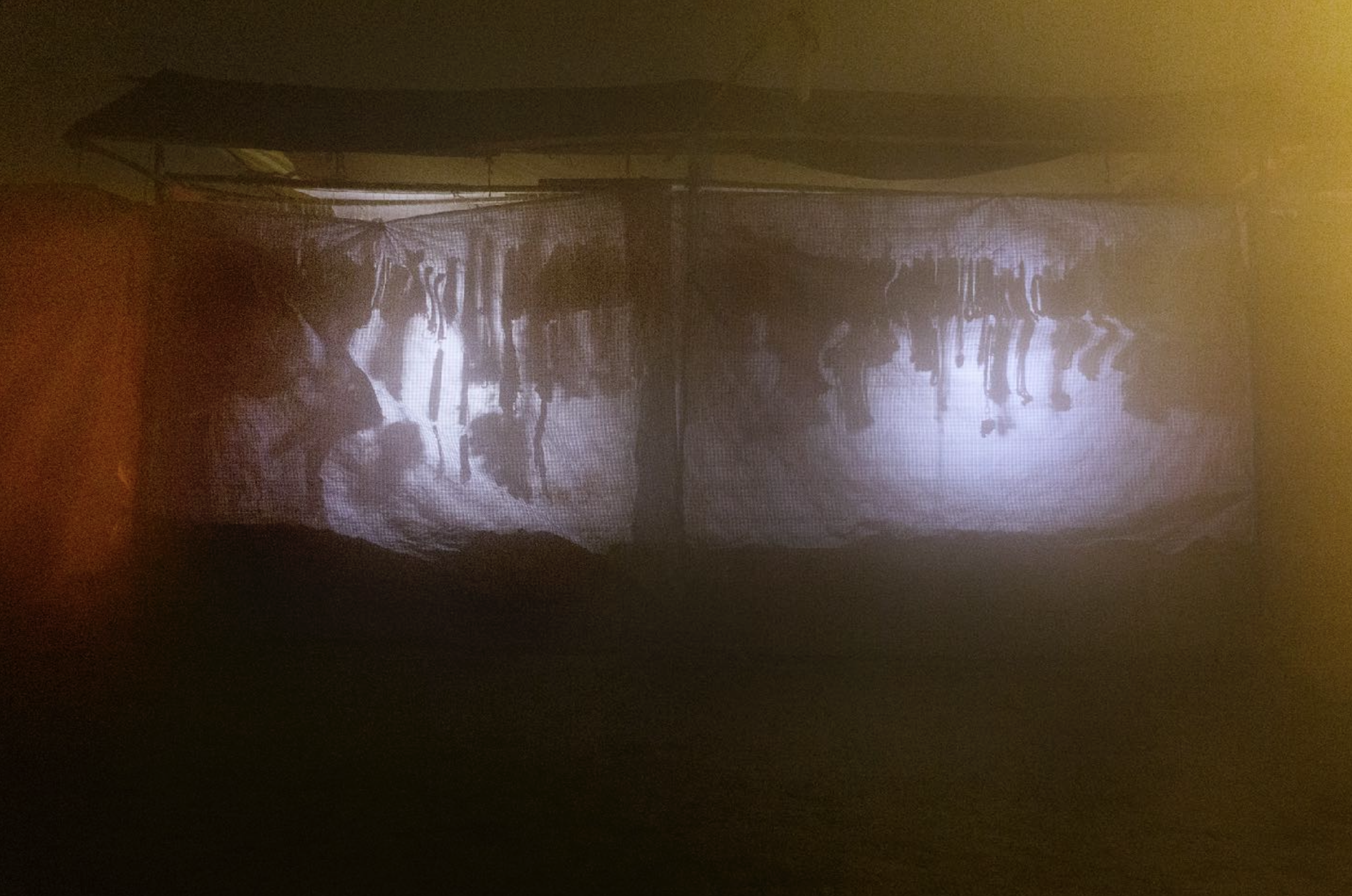
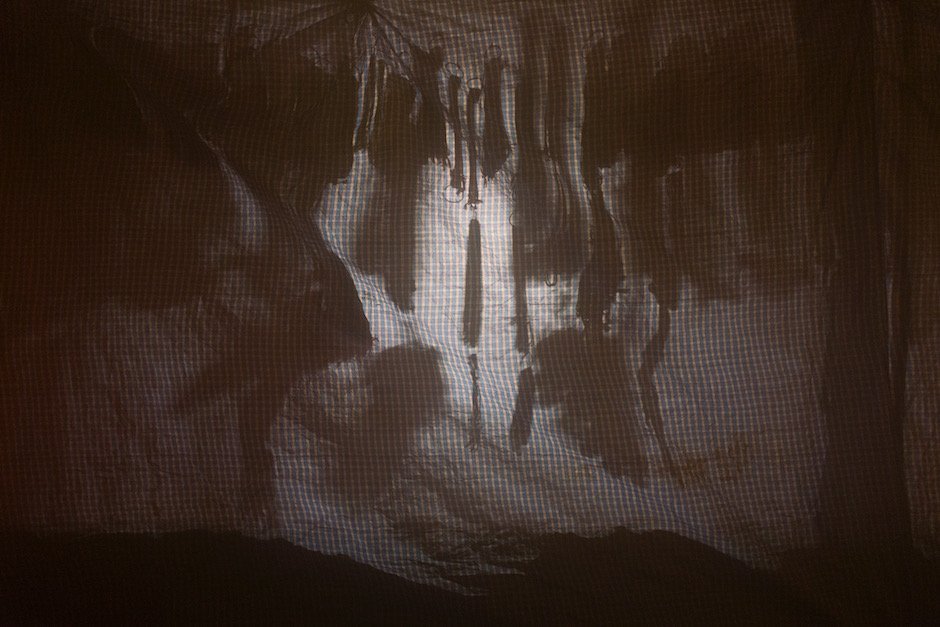
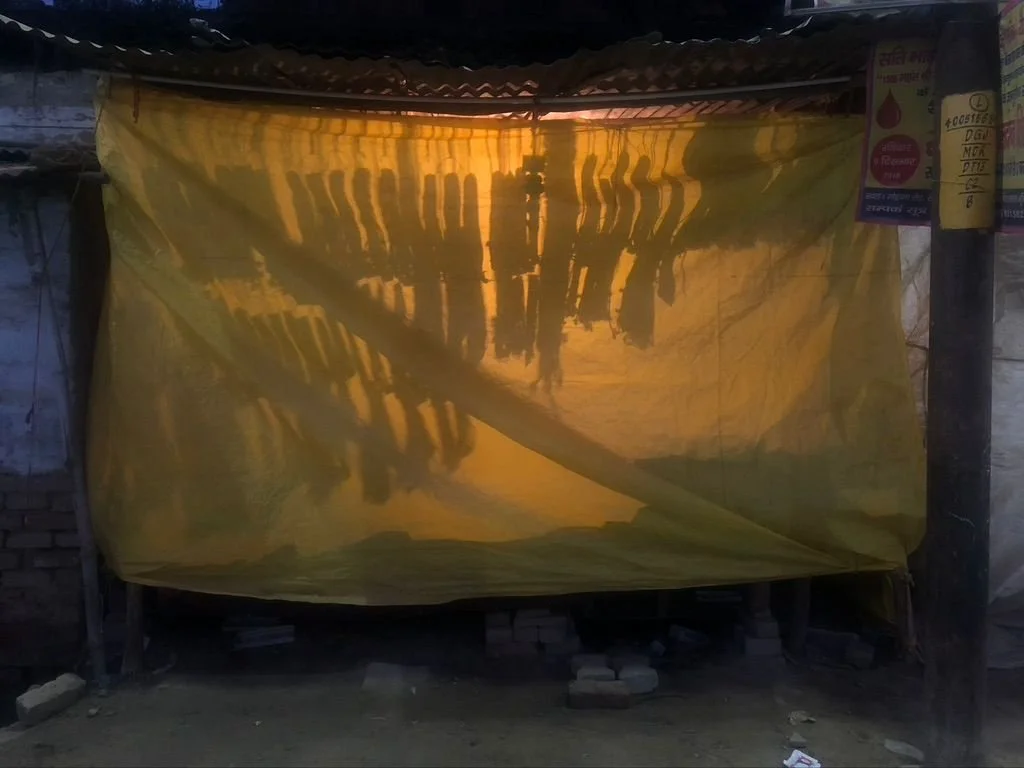
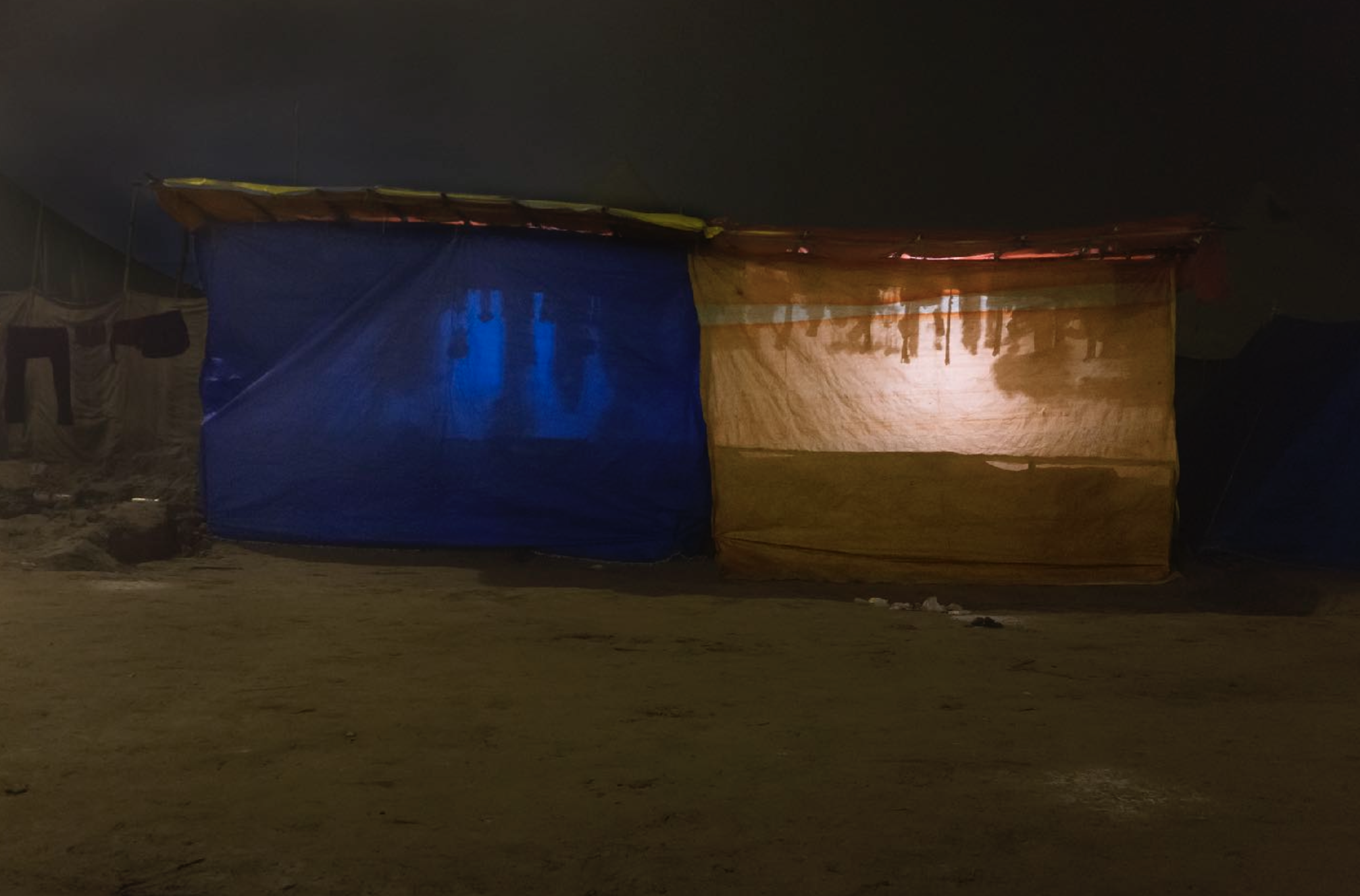
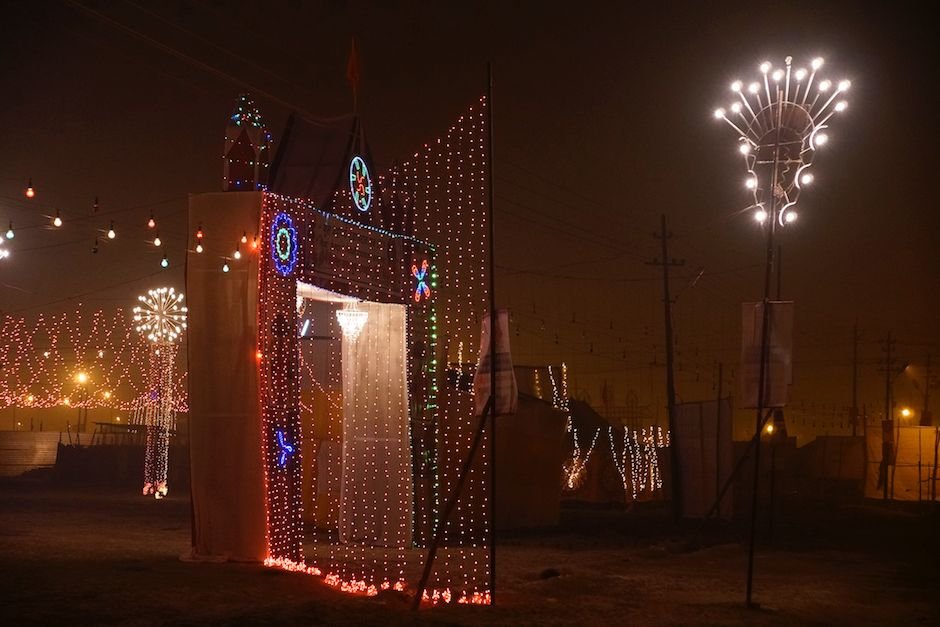
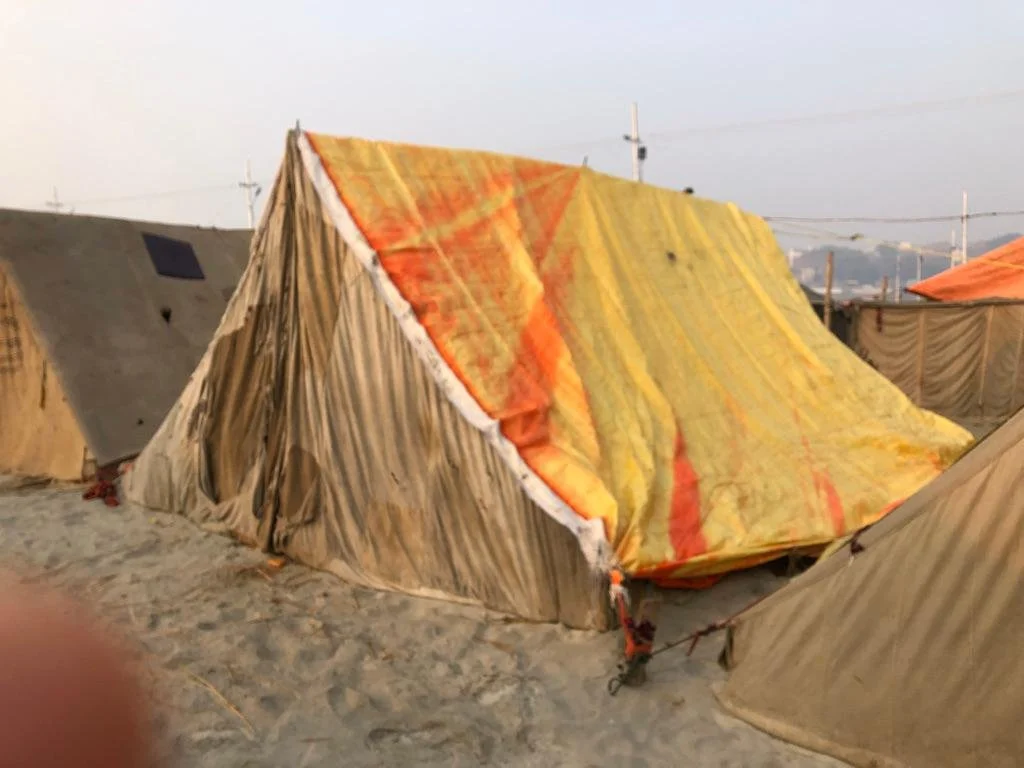
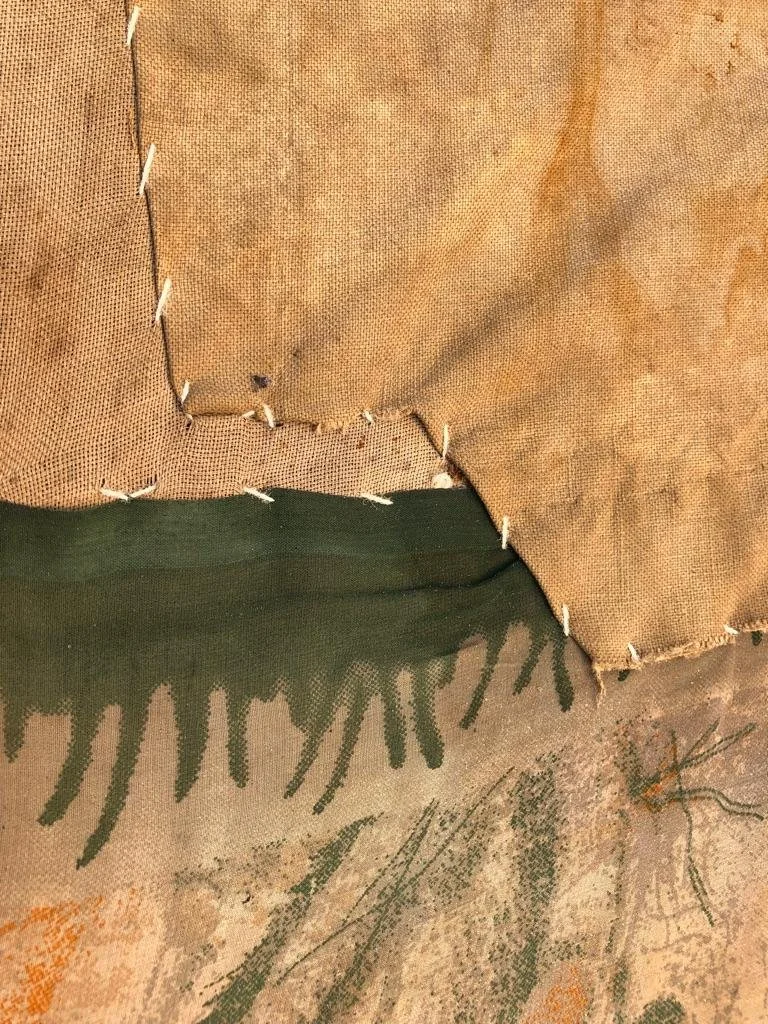
I photographed the tent structures throughout my stay, returning to the same areas repeatedly. I was drawn less to the crowds than to the spaces they left behind. Many of the tents I photographed were empty or shuttered, particularly at night. There was a sense of anticipation—as if something had just occurred or was waiting to happen. By day, the tents read as skins: patched cloth, seams, stains, and repairs—fabric marked by use and weather. By night, light revealed their interiors. Shadows gathered in folds and corners. The tents became chambers rather than shelters.
These structures are built for impermanence. They exist only for the duration of the festival, architectures shaped by devotion and release. Even when empty, they retain the imprint of the bodies that passed through them—resting, praying, waiting, sleeping.
These photographs are records of the temporary fabric city as it was lived and inhabited. They attend to its structures rather than its crowds, to moments when activity receded, and space remained. By lingering on empty or shuttered tents, the images register presence through absence—how bodies shape space even after they have moved on.