Charnel Grounds
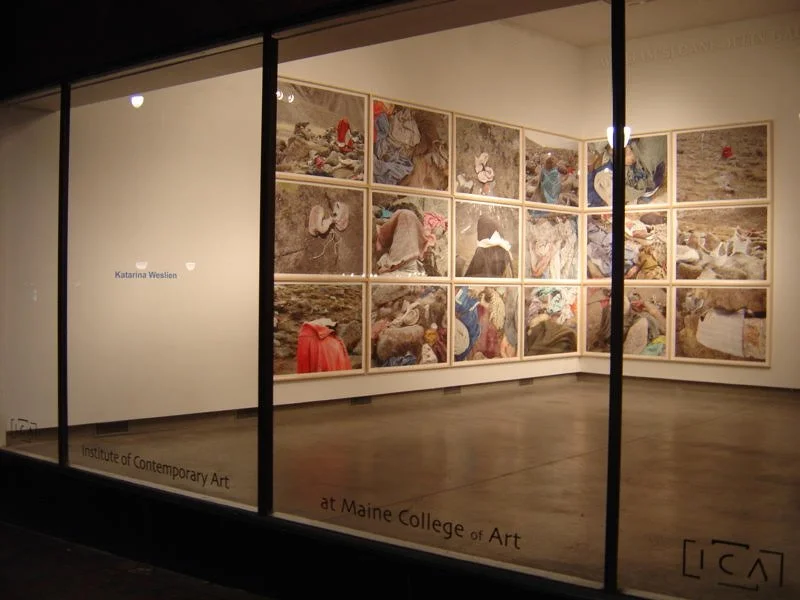
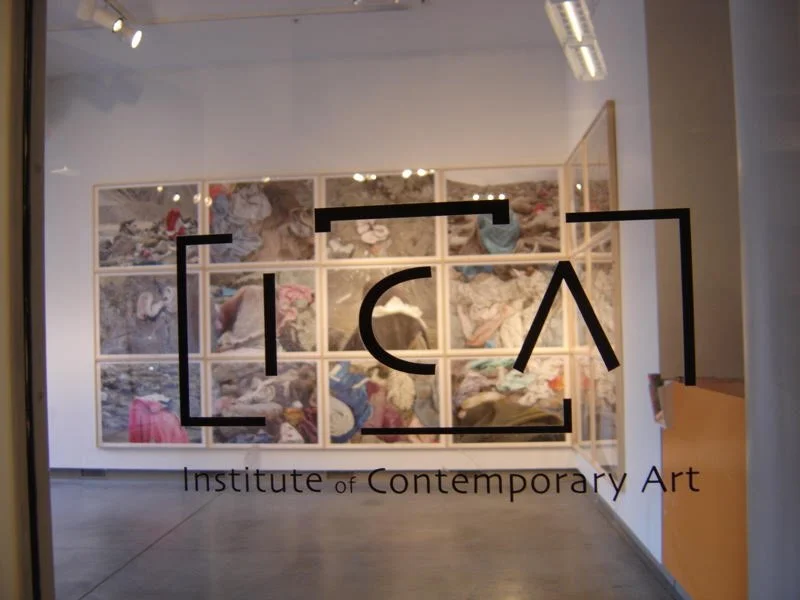
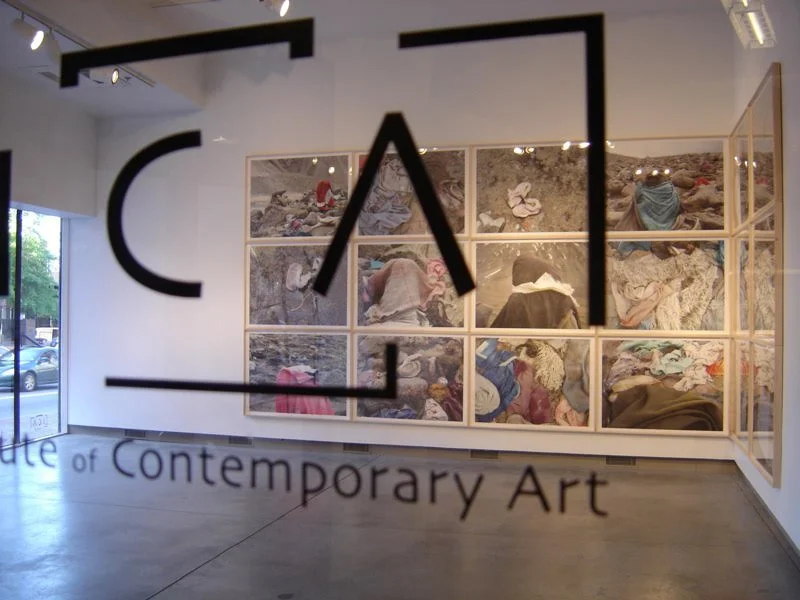
Photographs, exhibited at the Institute for Contemporary Art at the Maine College of Art & Design, Portland, ME
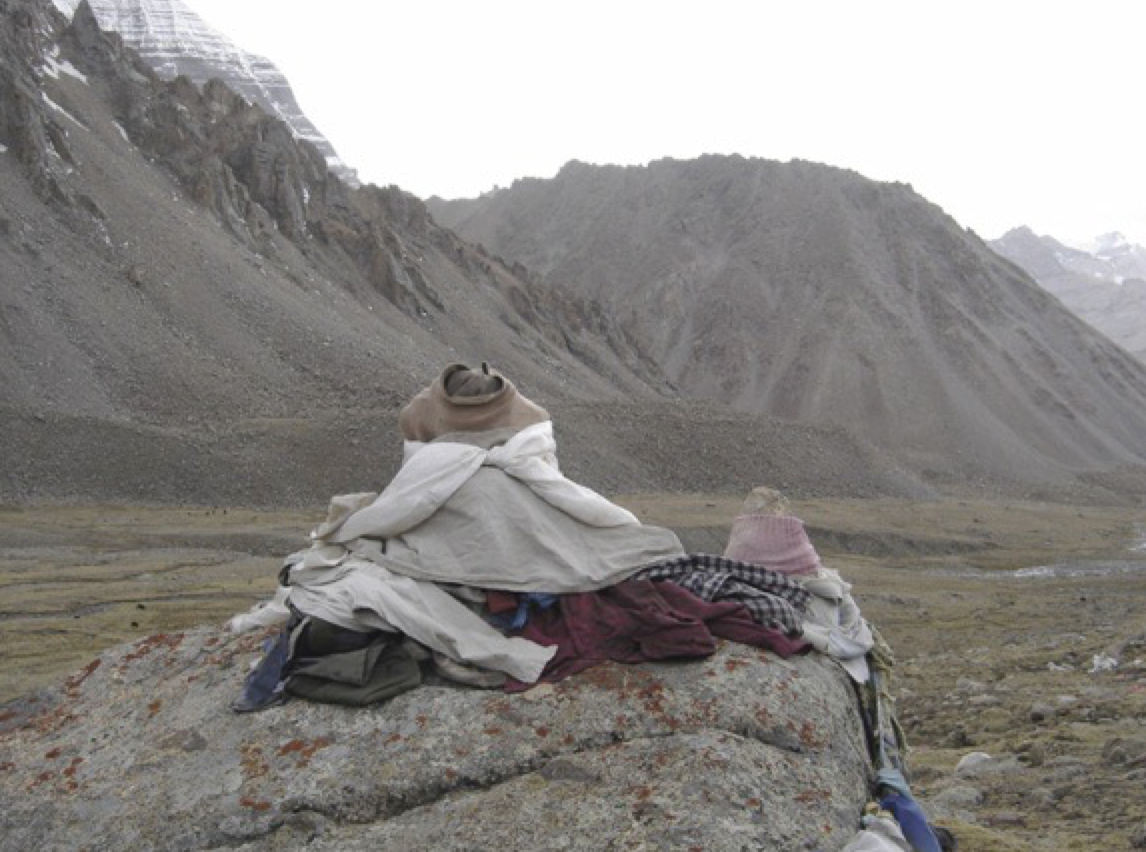
In 2014, I joined a pilgrimage to Mount Kailash in western Tibet, led by Robert Thurman through Tibet House, New York. These images are taken on the north face of the mountain. In Tibetan Buddhism, this side is associated with death and impermanence; Thurman refers to it as “the charnel-ground side of the mountain.”
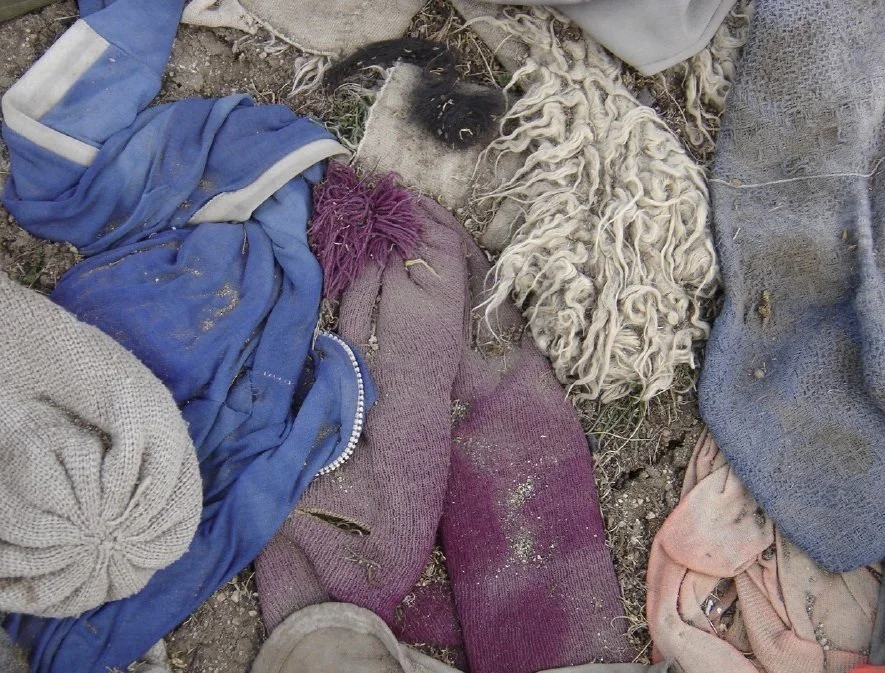
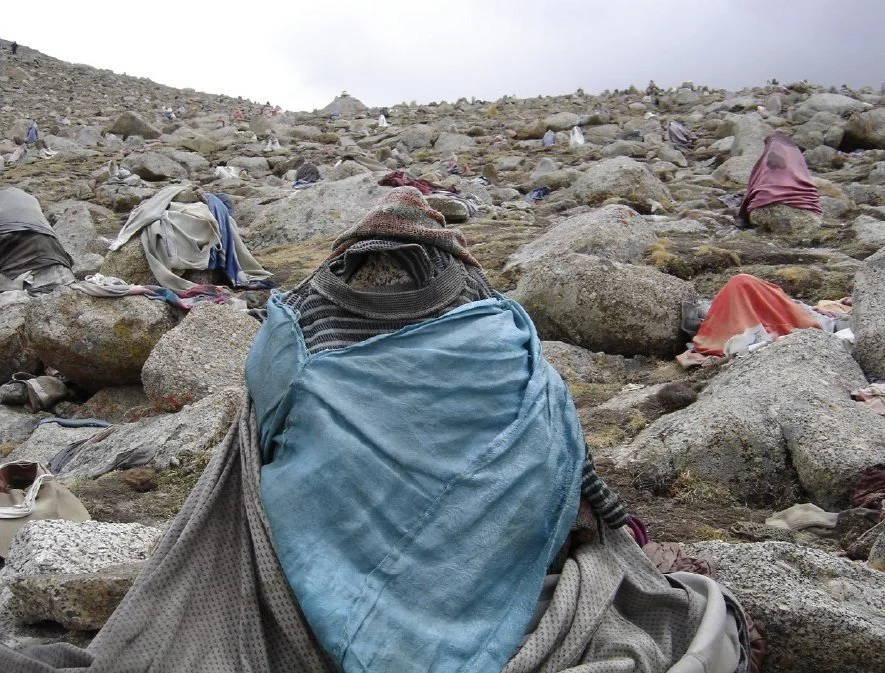
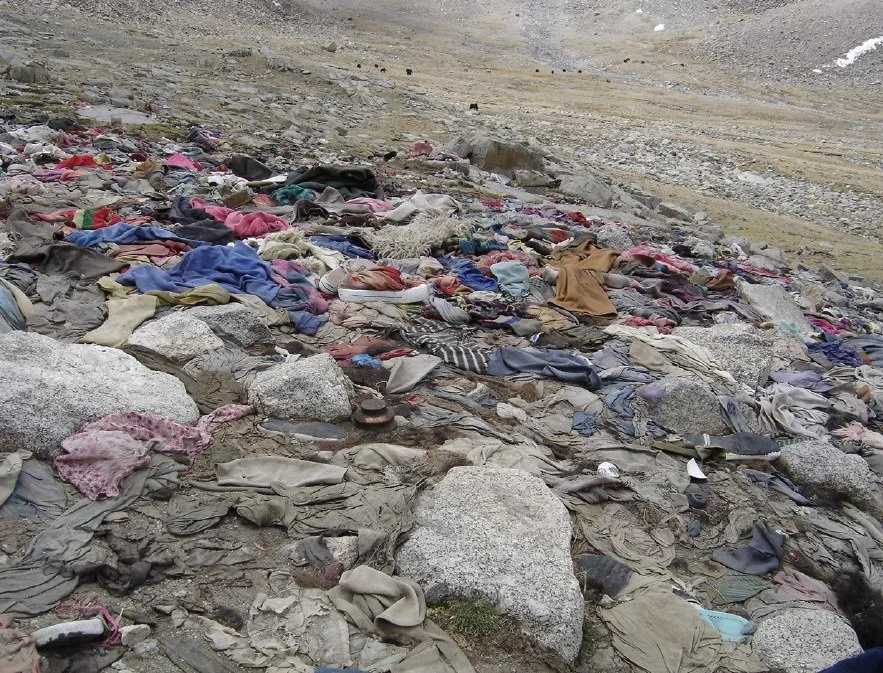
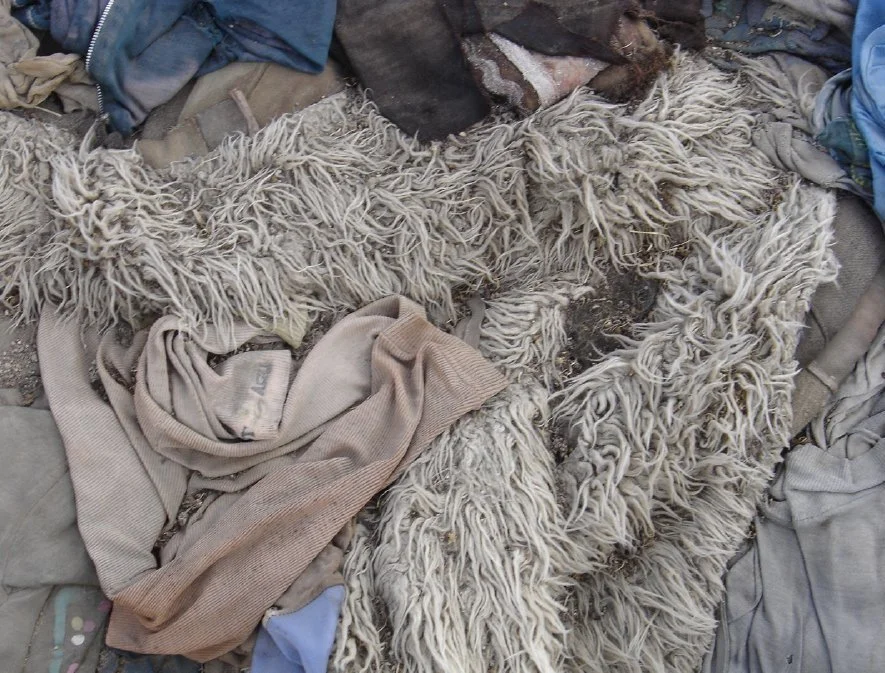
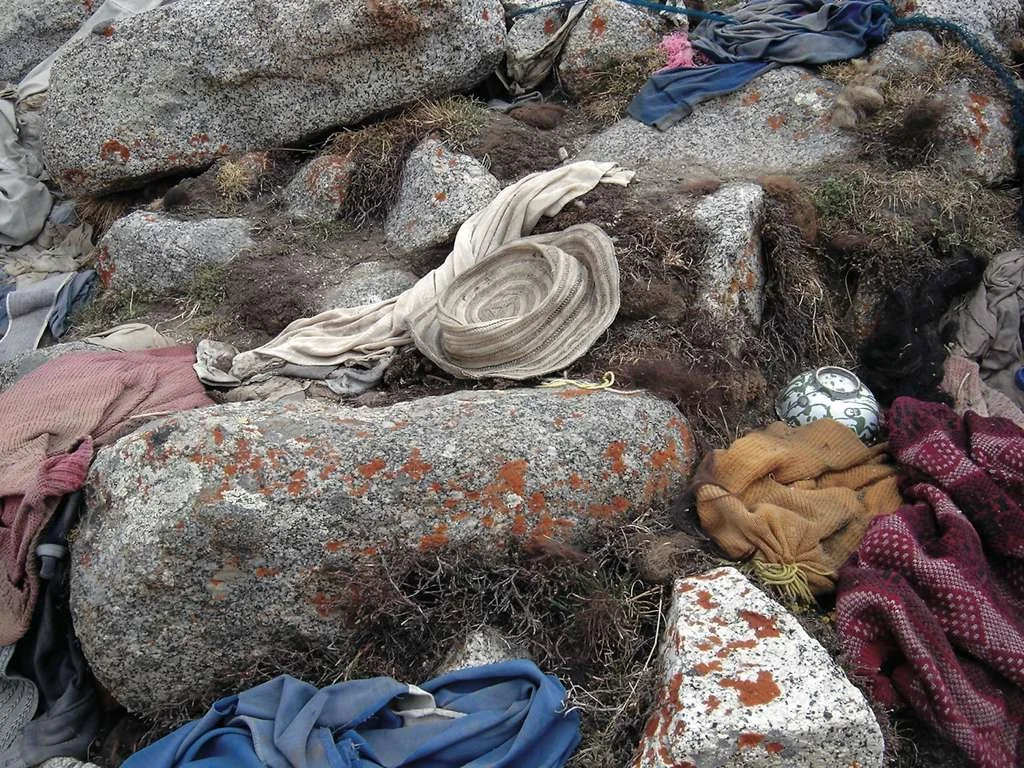
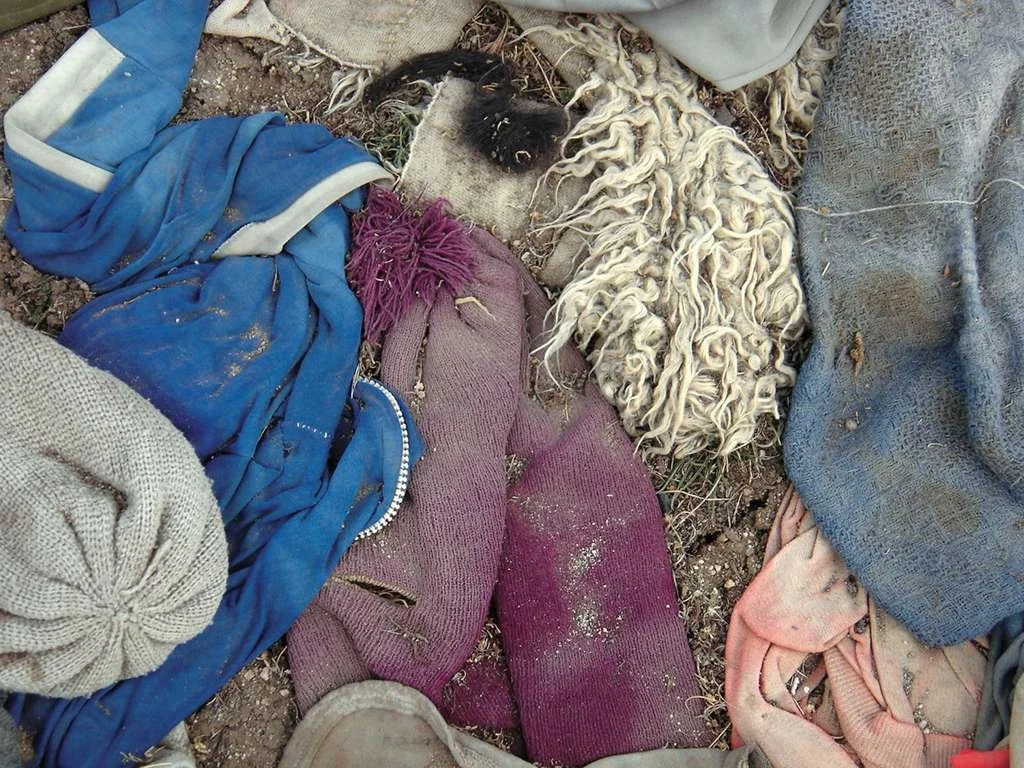
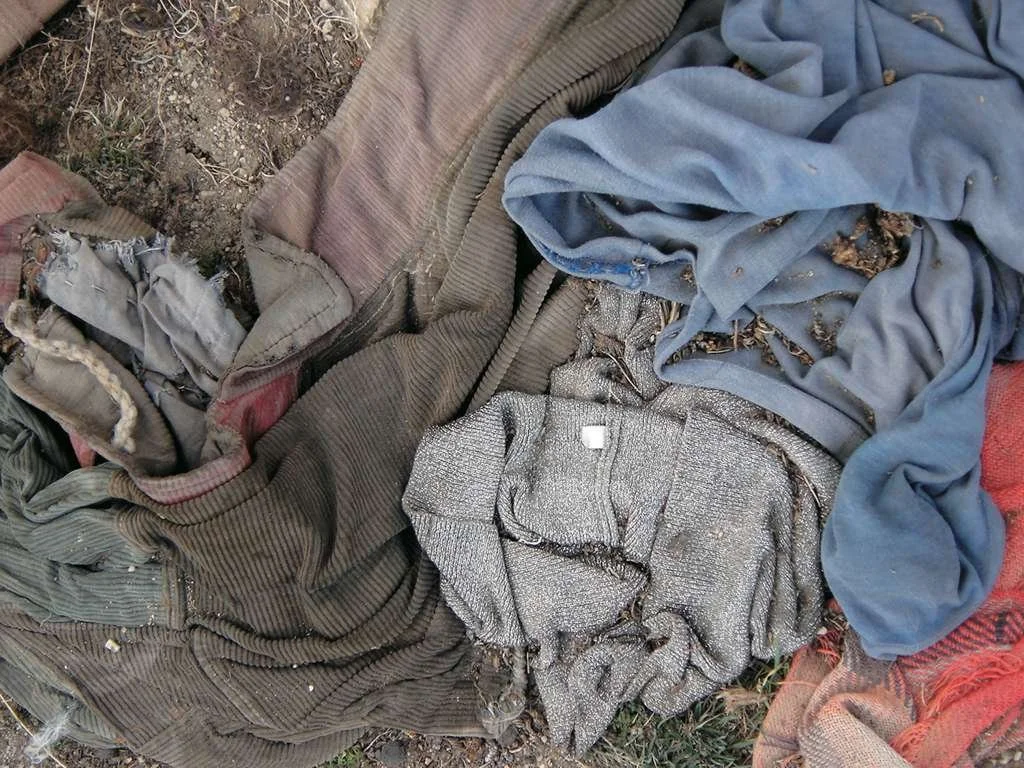
Crossing the 18,500-foot pass marks a transition. Above the tree line, the landscape becomes stark and exposed. During circumambulation, the charnel ground first appears as a colorful field—what at a distance seems botanical. On closer approach, it reveals itself as a dense expanse of used clothing, packed down by time, weather, and repeated passage.
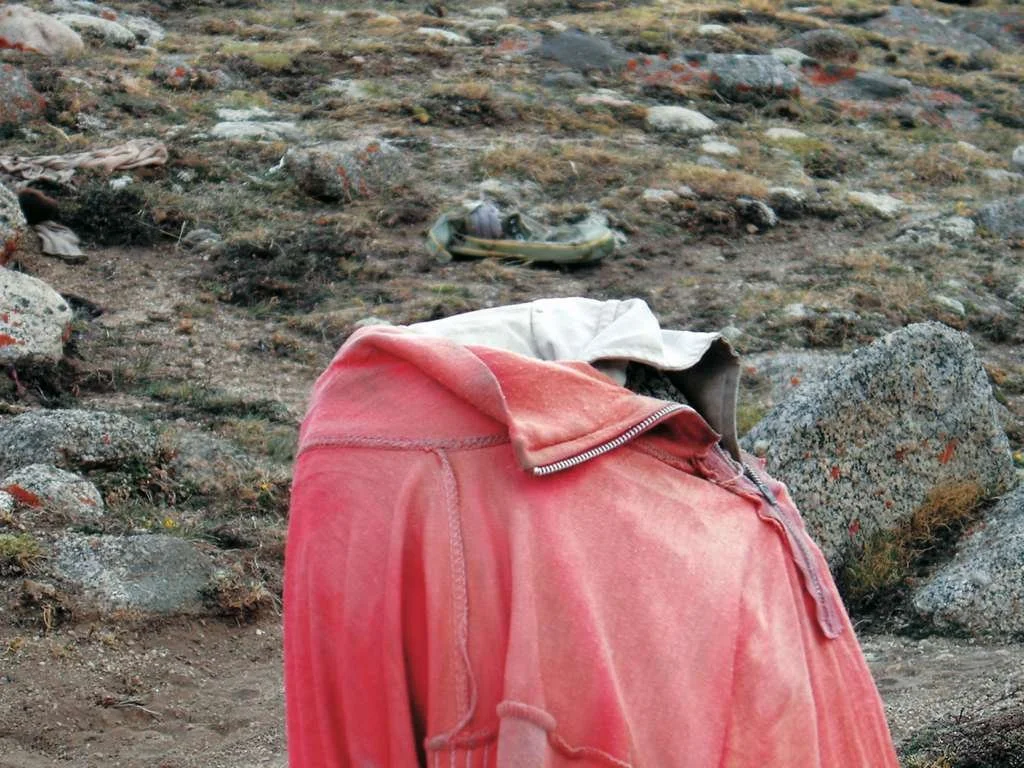
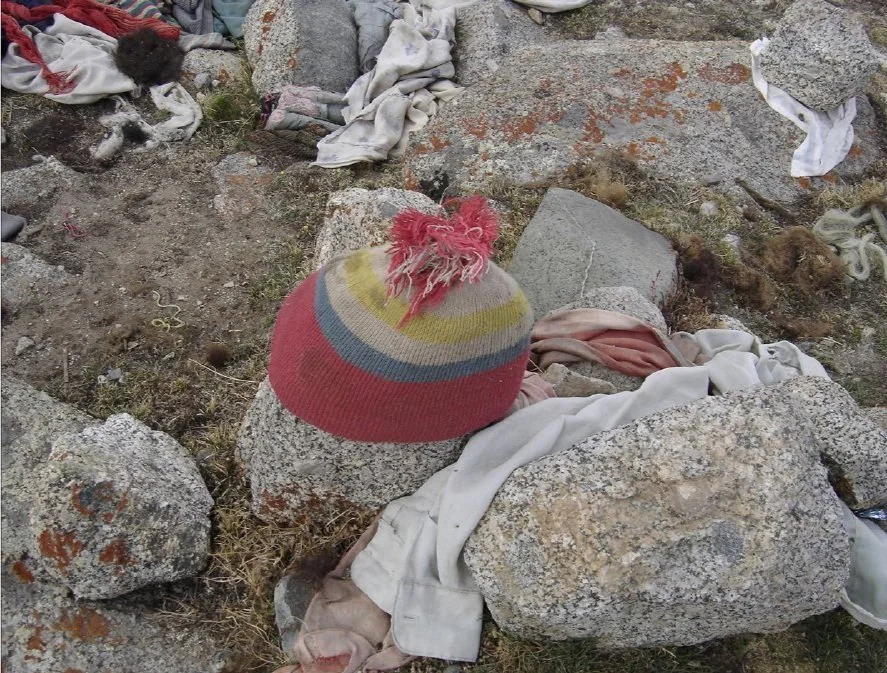
Garments are left behind as offerings: clothes given in remembrance of those who have died or are ill, and as acts of release—letting go of former lives, attachments, and accumulated burden. The clothing remains after the pilgrims move on.
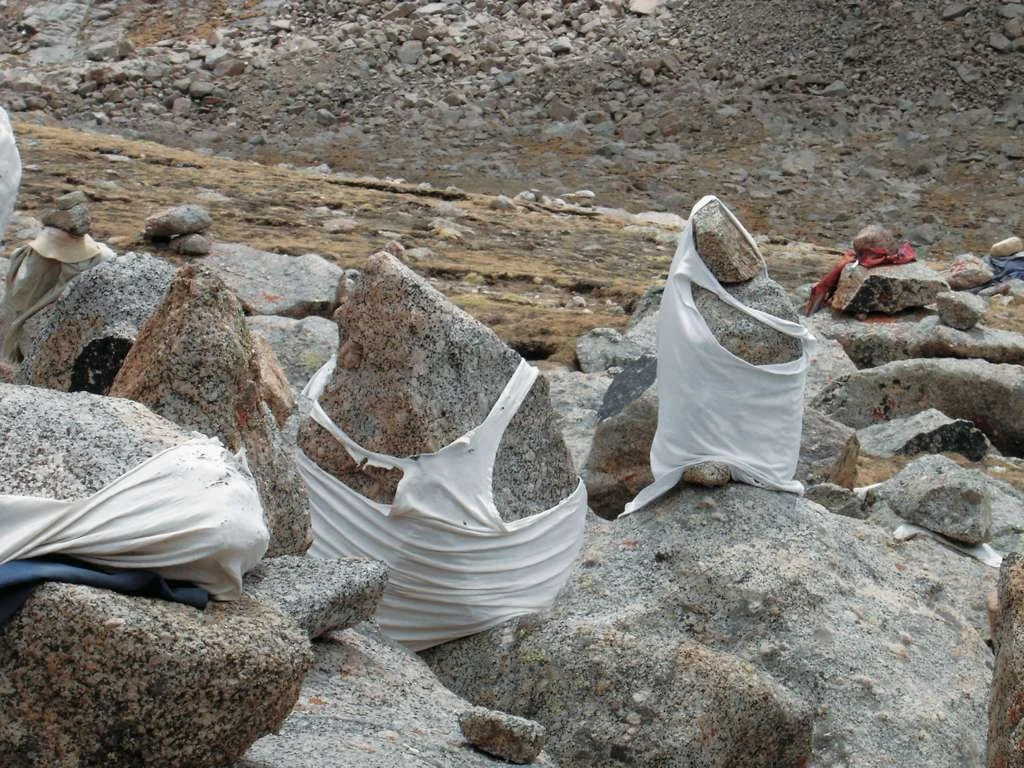
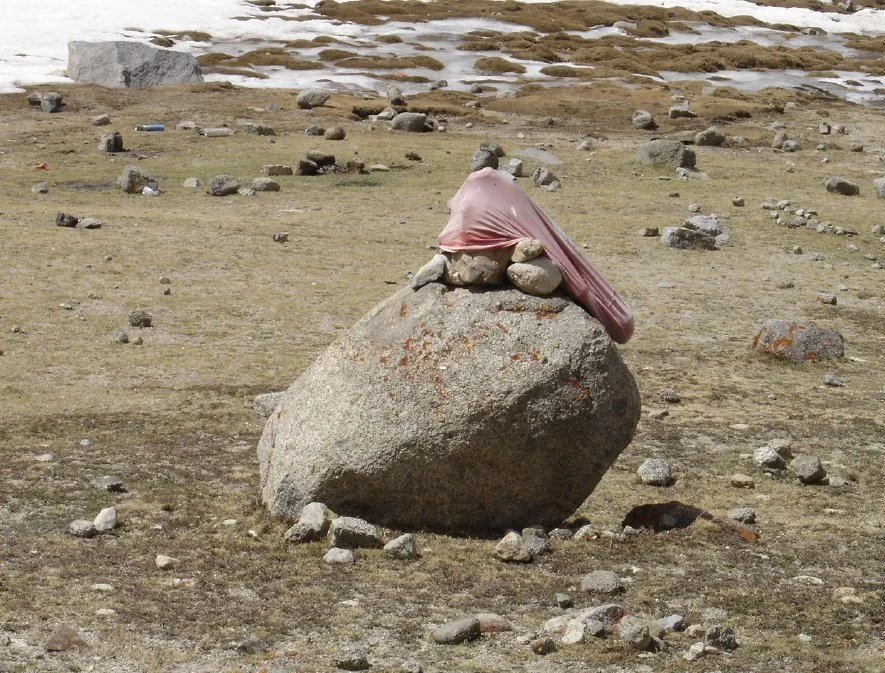
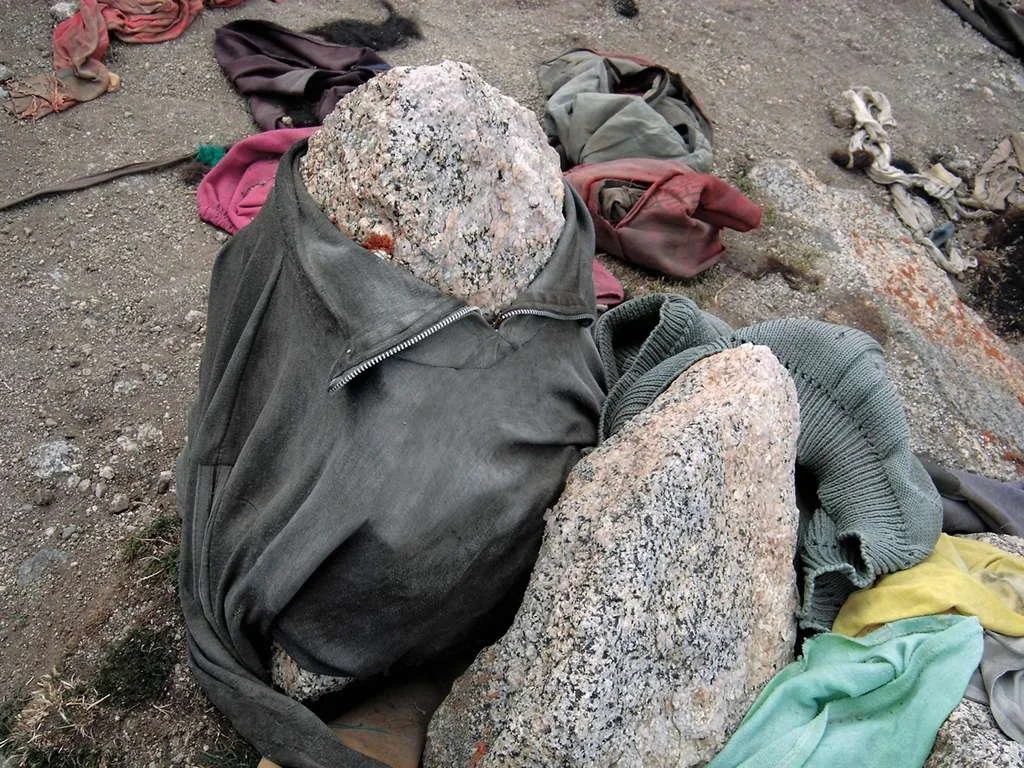
Some garments are wrapped around stones. The rocks appear dressed, almost embodied, as if the act of clothing them allows care to continue after the body is gone. Cloth becomes a substitute presence—an extension of the human when the body itself can no longer remain.
From birth to death, cloth accompanies the body. It swaddles, covers, insulates, protects. When the body is released, fabric persists as residue. These images attend to that threshold, where clothing carries memory and where the boundary between body and ground, presence and absence, begins to soften.
The photographs do not document ritual so much as pause within an ongoing process—quiet transformations unfolding through place, time, and material, held without resolution.